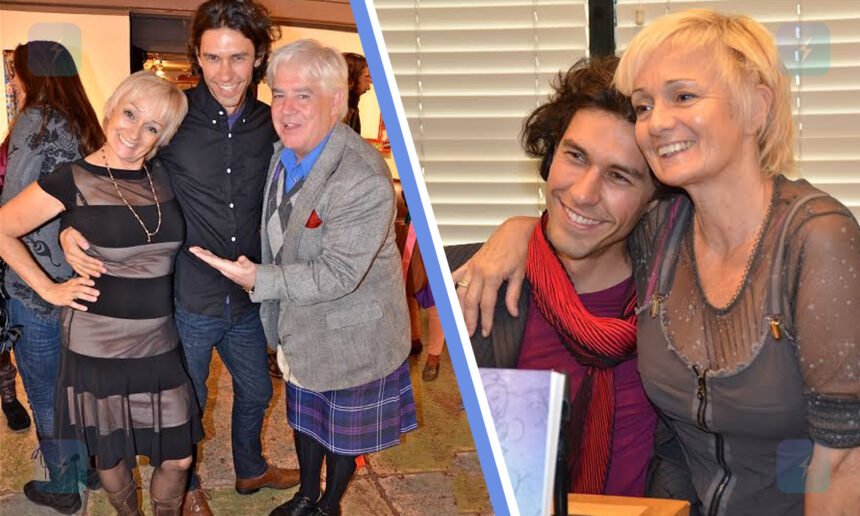
Julia Lazar, also known as Julia Lazar Franco, was an artist and creative collaborator whose life became closely connected with the Bay Area arts community and with American artist Tom Franco. Although many people discover her name because of her marriage to Tom—brother of actors James Franco and Dave Franco—Julia had an artistic identity and community role of her own. Public records connected with the Firehouse Art Collective show that she worked alongside Tom in developing spaces where artists could create, exhibit, perform, and collaborate.
Unlike celebrities whose lives are extensively documented through interviews, books, and mainstream media profiles, Julia left a relatively limited public record. This makes accuracy especially important. Many modern biography websites repeat highly specific claims about her childhood, music career, travels, family, and personal history without providing strong primary documentation. What can be established more confidently is her involvement with the Firehouse Art Collective, her artistic and curatorial activities, her relationship with Tom Franco, their 2014 marriage, and her death later that year.
Who Was Julia Lazar?
Julia Lazar was an artist associated with Berkeley, California, and the Firehouse Art Collective. Her surviving professional profile identifies her with the organization and lists the Academy of Fine Arts in Vienna, Austria, in her education history. It also records German and Hungarian among her languages.
Her public reputation is particularly tied to collaborative art. Rather than being known primarily for a conventional commercial art career built around major galleries or individual exhibitions, Julia appears repeatedly in material connected with community events, photography, curation, and multidisciplinary creative projects.
The Firehouse Art Collective describes Julia as an important supporter of Tom Franco when he became its sole director in 2010. The organization itself had begun in 2004 when a group of art-school friends wanted to establish an affordable studio environment run by artists for artists.
Julia therefore fits more accurately into the story of community-based art than into the traditional idea of celebrity. Her importance came from participation, collaboration, organization, and the relationships that helped creative communities function.
Julia Lazar’s Background and Early Life
The details of Julia Lazar’s early life require caution because authoritative biographical documentation is limited. Various secondary online biographies identify her as European-born and commonly connect her with Vienna, Austria. Her professional profile also supports a significant Austrian connection by listing the Academy of Fine Arts in Vienna as part of her educational background.
Some online profiles provide additional claims about her exact birth date, parents, childhood, and ethnic background. However, these details are not consistently backed by strong primary sources. They should therefore not be presented as established facts simply because they have been repeated across multiple websites.
What is better supported is Julia’s connection with art and creative culture. Her later activities in California show that art was not merely a casual interest. She participated directly in projects involving photography, event organization, curation, performance, and collaborative artistic environments.
That distinction matters when understanding Julia. She was more than someone who later married a member of the Franco family. Her documented professional and creative activities show that she was already comfortable working within artistic communities and contributed directly to the development of one.
Education and Artistic Development
Julia Lazar’s publicly available professional profile lists the Academy of Fine Arts in Vienna, Austria, under her education. Beyond that basic record, reliable information about the exact program she completed, the years she attended, or any formal degree she earned is difficult to verify.
For that reason, claims that assign her specific qualifications should be treated cautiously unless additional archival evidence becomes available.
Her later work nevertheless suggests a broad rather than narrowly specialized understanding of creativity. Julia was associated with photography, live art events, curation, communications, and the practical work required to operate an artistic community.
This multidisciplinary approach became especially visible through her relationship with Firehouse Art Collective. Community art organizations often require people to move between artistic and organizational responsibilities, and Julia appears to have done exactly that.
Her story is consequently useful as an example of how artistic influence does not always take the form of a famous painting, album, film, or individual exhibition. Sometimes the lasting contribution is creating conditions in which many other artists can work.
How Julia Lazar Met Tom Franco
Tom Franco is an American artist who studied fine art at the University of California, Santa Cruz and later ceramics at California College of the Arts. He is also known publicly as the brother of James Franco and Dave Franco.
According to a University of California, Santa Cruz profile of Tom, he met Julia while living at an ashram in Oakland. The same account says the two went on to develop the Firehouse Art Collective together and expand Tom’s collaborative art activities.
Their connection therefore had a strong creative component. Julia was not simply present alongside Tom’s work; available accounts describe them as partners who helped build artistic projects together.
The Firehouse Art Collective’s own history states that when Tom became sole director in 2010, he did so with Julia’s direct support. This is one of the clearest pieces of evidence for Julia’s role in Tom’s professional life.
Their partnership ultimately combined personal affection with a shared commitment to artistic community building.
Julia Lazar and the Firehouse Art Collective
The Firehouse Art Collective is central to understanding Julia Lazar’s public legacy.
The organization traces its beginnings to 2004. Its original members wanted an artist-run studio space where creative people could work together. The first location was on Harmon Street in South Berkeley, and the Firehouse name grew from local stories that the building had once functioned as a fire station.
Julia became deeply involved in the organization during its development. Mission Clay’s profile of Tom and James Franco states that Julia joined the Firehouse team in January 2010 and contributed through photography, communications, social media, collaborative artwork, and the curation of live art events.
Her involvement coincided with a period of significant expansion. A UCSC profile reports that with Julia working alongside Tom, Firehouse developed multiple locations and activities in Berkeley.
A 2014 East Bay Express article also identified “Julia Lazar and Tom Franco of Firehouse Art Collective” while examining artist collectives that were attempting to create sustainable environments for artists in the East Bay.
Together, these records provide stronger evidence of Julia’s professional importance than many of the more sensational details found in celebrity biographies.
Her Approach to Collaborative Art
One of the most consistent themes surrounding Julia Lazar is collaboration.
Firehouse was built around the idea that artists benefit when they share resources, spaces, skills, audiences, and ideas. Julia’s documented participation in live events and curatorial projects placed her directly inside that philosophy.
An archived Firehouse Art Collective post from 2013, for example, identifies Julia Lazar and Tom Franco as hosts of a Yerba Buena Center for the Arts ConVerge event. The program brought together performance artists and other creative participants around an explicitly collaborative approach to culture and art.
Another Firehouse post from 2013 was published by Julia herself while promoting an exhibition connected with Tom’s work and the collective. The post discussed art being developed through an evolving process and encouraged community involvement.
These surviving materials are valuable because they document Julia’s participation at the time rather than reconstructing her life years later.
They show someone actively communicating with audiences, promoting artists, organizing events, and helping collaborative projects reach the public.
Julia Lazar as a Photographer and Curator
Photography and curation are among the creative roles most clearly associated with Julia in publicly available material.
Mission Clay describes her as a collaborating artist involved in photography and in curating live art events. These activities complement the wider philosophy of Firehouse, where distinctions between artist, organizer, curator, and community builder were often flexible.
Curating requires more than simply displaying finished pieces. In a collaborative setting, it involves bringing artists together, shaping an event, establishing relationships between different works, communicating with participants, and helping audiences understand the overall experience.
Photography can play a similarly broad role. It may function as independent artistic expression while also documenting temporary performances, exhibitions, gatherings, and collaborative projects.
Julia’s association with both fields therefore helps explain why she could contribute meaningfully to an organization built around multidisciplinary creativity.
Julia Lazar and Tom Franco’s Creative Partnership
Julia and Tom’s relationship developed into a partnership that crossed the boundary between private and professional life.
The UCSC account describes Julia as Tom’s wife and partner and credits the pair with further developing Firehouse and expanding collaborative projects. The Firehouse organization’s current history likewise remembers Julia as an important source of support during the collective’s development.
This makes their relationship different from the simplified version sometimes presented in celebrity coverage. Julia was not only “Tom Franco’s wife.” Their lives intersected through artistic practice, community organization, and a shared interest in collaboration.
The surviving record also demonstrates why Julia continued to be mentioned in accounts of Firehouse after her death. Her contribution formed part of the collective’s history during a period when it expanded beyond its earliest studio model.
Marriage to Tom Franco
Julia Lazar and Tom Franco married on July 28, 2014. IMDb’s biographical record for Tom Franco lists their marriage from July 28, 2014, until Julia’s death on August 25 of that year.
The wedding took place while Julia was seriously ill. Accounts of Tom’s life describe the ceremony as taking place in a hospital setting shortly before her death.
Because their legal marriage lasted only several weeks, online summaries can give the misleading impression that their relationship itself was brief. Their documented creative partnership, however, existed well before the wedding. Firehouse records connect Julia with Tom’s work from around 2010, while the UCSC profile says the pair had met earlier through the Oakland ashram community.
Their wedding should therefore be understood as one moment near the end of a much longer personal and artistic relationship.
Julia Lazar’s Illness and Death
Julia Lazar died on August 25, 2014.
Public accounts describe her final illness as involving severe liver and kidney problems. Mission Clay’s profile states that she experienced liver failure associated with hepatitis C and liver cancer, along with kidney complications.
A contemporaneous August 2014 appeal supporting Julia described her as a Bay Area artist and emphasized the community that had formed around her during her illness. It also described Firehouse as a project directed by Tom and Julia that provided space for artists and interdisciplinary collaboration.
Health information deserves particular care, especially when discussing someone who cannot clarify the public record herself. The details above reflect published accounts rather than an independent medical assessment.
What can be stated confidently is that Julia was seriously ill during the final period of her life, married Tom shortly before her death, and died in August 2014.
Why Julia Lazar Still Attracts Public Interest
Interest in Julia Lazar comes from several overlapping directions.
Some readers discover her while researching Tom Franco. Others arrive through the wider Franco family because Tom is the brother of James and Dave Franco. A different group encounters Julia through the history of Berkeley’s independent art community and Firehouse Art Collective.
The last route is particularly important because it provides a fuller understanding of her life.
Reducing Julia’s identity to her marriage misses the strongest documentary evidence available about her. She helped support and develop an arts organization, participated in collaborative events, worked with photography and curation, and appeared publicly alongside Tom in connection with Firehouse.
The Firehouse Art Collective continues to describe its history in terms of creating artist-run spaces and bringing together large numbers of artists. Its current website explicitly includes Julia in the story of its development.
That continuing acknowledgment helps explain why her name remains relevant more than a decade after her death.
Verified Facts and Claims That Remain Uncertain
The internet contains many biographies of Julia Lazar, but not every frequently repeated detail has the same evidentiary value.
The strongest publicly supported facts include her association with Firehouse Art Collective, her creative partnership with Tom Franco, her involvement with photography and live art events, her connection to art education in Vienna, her marriage to Tom on July 28, 2014, and her death on August 25, 2014.
Other websites make much more detailed claims. These include precise accounts of her childhood, family members, previous relationships, musical career, international travels, culinary training, and personal finances.
Some of these details may ultimately be accurate, but many circulate mainly through secondary celebrity-biography websites that cite one another or provide little indication of their original evidence.
The same caution applies to supposed net-worth figures. No reliable public financial disclosure establishes a verified personal net worth for Julia Lazar. Exact dollar estimates presented by entertainment sites should not be treated as established financial facts.
A responsible biography should preserve that distinction rather than filling documentary gaps with attractive but uncertain details.
Julia Lazar’s Legacy in the Bay Area Arts Community
Julia Lazar’s most clearly documented legacy is tied to the artistic community she helped nurture.
Firehouse Art Collective’s history states that thousands of artists have participated in its activities over the years. The organization has worked to bring artists together, maintain creative spaces, and develop partnerships with other arts organizations.
It would be inaccurate to attribute the entire success of Firehouse to Julia. The collective was founded before her involvement and has depended on many artists, managers, collaborators, and community members.
It would be equally inaccurate, however, to erase her contribution.
The organization’s own historical material acknowledges her direct support, while contemporary and institutional sources describe her working alongside Tom during an important stage of Firehouse’s expansion.
That may be the clearest way to understand her legacy: not as a conventional celebrity, but as someone who helped strengthen a network in which creativity could be shared.
What Julia Lazar’s Story Shows About Community-Based Art
Julia’s story also highlights an aspect of creative culture that is easy to overlook.
Public attention usually concentrates on the person whose name appears on a painting, movie, album, or book. Yet functioning artistic communities depend on many additional forms of labor: organizing exhibitions, finding spaces, promoting events, documenting performances, communicating with audiences, connecting artists, and maintaining relationships.
Julia’s work with Firehouse touched several of those areas.
Her documented participation illustrates how cultural influence can be collective rather than individual. A curator can create opportunities for dozens of artists. A photographer can preserve an otherwise temporary performance. An organizer can transform an empty space into a functioning creative community.
Seen from that perspective, Julia’s importance is less about celebrity and more about infrastructure—the human relationships that allow art to happen.
Julia Lazar in the Historical Record
Anyone researching Julia Lazar should be aware of another practical problem: the name is not unique.
Search results now include several professionals named Julia Lazar working in unrelated fields and locations. Modern profiles belonging to other people should not be combined with information about Julia Lazar Franco. This is especially important when researching education, employment, social-media accounts, or professional accomplishments.
The most useful sources for Julia Lazar Franco are materials that explicitly connect her with Tom Franco, Berkeley, or the Firehouse Art Collective.
Contemporary Firehouse blog posts are particularly helpful because they show Julia actively participating in events before her death. Institutional profiles of Tom and Firehouse’s own historical pages provide additional context.
Using those sources rather than automatically combining every result for “Julia Lazar” produces a much more accurate picture.
Bottom Line
Julia Lazar was a creative figure whose most reliably documented work was connected with Tom Franco and Berkeley’s Firehouse Art Collective. She supported the collective during an important stage of its development and participated in photography, curation, communications, and collaborative live-art activities. Firehouse’s own history continues to acknowledge her role in the organization’s growth.
She married Tom Franco on July 28, 2014, while seriously ill and died on August 25, 2014. Their legal marriage was brief, but their personal and creative partnership had existed for years before the wedding.
The most accurate way to remember Julia is therefore not simply as Tom Franco’s late wife or as a peripheral member of a famous family. Available contemporary evidence presents her as an active participant in an independent arts community—someone involved in organizing, documenting, curating, and supporting collaborative creativity.
At the same time, significant parts of her personal history remain poorly documented. Rather than repeating unsupported birth details, wealth estimates, career claims, or family information as fact, a reliable biography should acknowledge those gaps. Doing so leaves a smaller but much stronger picture of Julia Lazar: an artist, collaborator, community contributor, and important figure in the history of Firehouse Art Collective.
Frequently Asked Questions
Who was Julia Lazar?
Julia Lazar, also known as Julia Lazar Franco, was an artist and creative collaborator associated with Berkeley’s Firehouse Art Collective. She worked closely with artist Tom Franco and contributed to photography, curation, live events, and the development of the collective.
Was Julia Lazar married to Tom Franco?
Yes. Julia Lazar and Tom Franco married on July 28, 2014. Their marriage legally lasted until Julia’s death on August 25, 2014, although their relationship and artistic collaboration had begun years earlier.
How did Julia Lazar and Tom Franco meet?
A University of California, Santa Cruz profile of Tom Franco states that he met Julia while living at an ashram in Oakland. They later worked together on Firehouse Art Collective and collaborative art projects.
What did Julia Lazar do at Firehouse Art Collective?
Firehouse credits Julia with directly supporting Tom Franco as he led the organization. Other material connected with the collective describes her involvement in photography, communications, collaborative art, social media, and curating live art events.
When did Julia Lazar die?
Julia Lazar died on August 25, 2014. Published accounts describe serious liver and kidney complications during the final period of her life.
Was Julia Lazar a musician?
Several secondary biography websites describe Julia as a singer or musician, sometimes providing specific claims about bands and earlier musical activity. However, stronger primary and institutional sources available publicly focus much more clearly on her visual-art, photography, curatorial, and Firehouse Art Collective work. Specific music-career claims should therefore be treated as less firmly verified unless supported by additional archival evidence.
What is Julia Lazar remembered for?
Julia Lazar is most reliably remembered for her creative partnership with Tom Franco and her contribution to Firehouse Art Collective. Contemporary and organizational records show her helping promote collaborative art, curate events, work with photography, and support an expanding community of Bay Area artists.