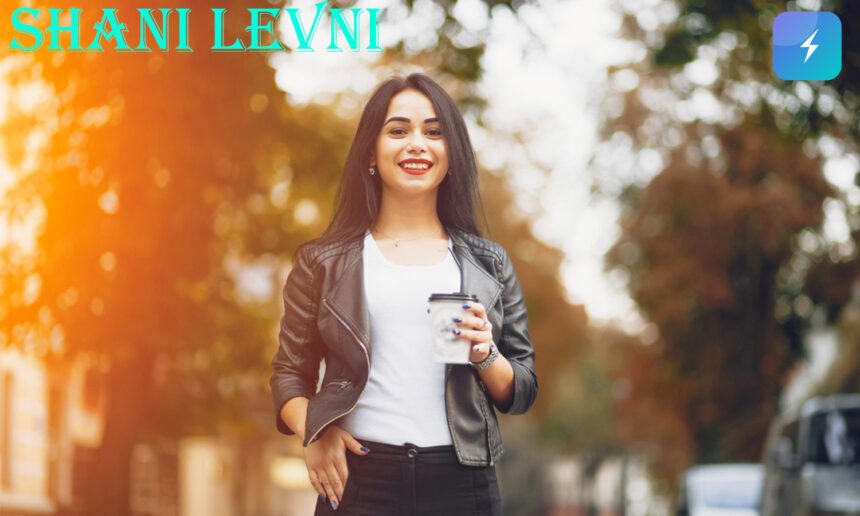
Shani Levni is a name that has become increasingly visible across online articles about art, creativity, identity, and contemporary culture. Search results often describe her as a multidisciplinary artist associated with painting, photography, mixed media, installation, and community-focused creative work. Some profiles go much further, offering a detailed biography that includes education, exhibitions, artistic projects, and personal relationships.
There is an important problem, however: many of those specific details are difficult to confirm through strong, independent primary sources. Recent publications investigating the name have reached a similar conclusion. A detailed narrative exists online, but much of it appears to circulate among secondary websites rather than being supported by museum archives, established galleries, educational institutions, interviews, or major media coverage.
That does not establish that a person named Shani Levni does not exist. It means that anyone researching the name should distinguish carefully between what websites report and what can currently be independently verified. This article takes that evidence-first approach.
Who Is Shani Levni?
Online profiles most commonly present Shani Levni as an artist or creative figure. The descriptions frequently associate the name with contemporary visual art and a multidisciplinary approach that supposedly combines different forms of expression.
A website using the exact-match domain ShaniLevni.com describes Levni as a Tel Aviv-based multidisciplinary artist working with photography, painting, and community arts. However, its own About page explicitly states that the website is an independent editorial resource and is not affiliated with, endorsed by, or operated by Shani Levni or anyone representing her.
That disclaimer is significant. An exact-name website can easily look like an official artist portfolio at first glance, but in this case the site itself says it should not be treated as an official source representing Levni.
Other recent publications have likewise warned that the available public record is unusually limited. The Roman Magazine, for example, notes that the name is connected online with art and creative work but that many detailed claims appearing on smaller biography websites lack strong public confirmation.
The safest description, therefore, is that Shani Levni is an online biographical subject commonly presented as a contemporary multidisciplinary artist, while many details of that biography remain independently unverified.
Why Has Shani Levni Attracted Online Attention?
Part of the interest surrounding Shani Levni comes from the unusual structure of her digital footprint. There are numerous pages discussing the name, yet comparatively little authoritative documentation behind the highly specific biographies appearing in search results.
This creates a familiar internet problem: repetition can look like verification. If ten websites repeat the same date, educational credential, exhibition, or personal connection, a reader may naturally assume ten independent sources have confirmed it. In reality, websites can copy, summarize, rewrite, or indirectly rely on the same original claim.
Several 2026 articles specifically investigating Shani Levni have identified this issue. They report finding detailed descriptions across many secondary sites while struggling to locate corresponding primary evidence from galleries, museums, universities, or established media.
This makes the topic relevant beyond one person’s biography. It illustrates an important challenge in modern online research: search visibility and factual reliability are not the same thing.
The Artistic Identity Associated With Shani Levni
The most consistent theme across Shani Levni search results is art. Various online biographies characterize her as a contemporary or multidisciplinary artist rather than someone limited to one creative medium.
Painting, photography, mixed media, installation, performance, writing, and digital composition have all been associated with her name across different secondary sources. Some articles describe a creative practice centered on identity, memory, cultural heritage, belonging, emotional experience, and social connection.
These descriptions provide useful context for understanding the online narrative surrounding Shani Levni, but they should not automatically be treated as a verified catalogue of her work.
For example, the dedicated ShaniLevni.com website publishes an extensive description of an alleged artistic style that combines photography and painting and emphasizes emotionally expressive imagery. Yet because the website identifies itself elsewhere as an independent editorial resource, its descriptions are better understood as secondary editorial claims rather than statements directly from the artist.
This distinction prevents a common research mistake: converting detailed writing into established biography simply because the writing sounds authoritative.
Reported Themes in Shani Levni’s Art
Online descriptions repeatedly associate the Shani Levni profile with themes such as memory, identity, belonging, cultural experience, and emotional expression.
These themes would fit naturally within contemporary multidisciplinary art, where artists frequently combine materials and methods to explore personal or social questions. Photography can document experiences, painting can introduce subjective interpretation, and mixed media can connect objects, textures, images, and symbolic elements.
In Levni’s case, however, the challenge is connecting these descriptions to a documented body of original artwork. Secondary websites provide interpretations, but independent catalogues, established critical reviews, institutional artist pages, and clearly authenticated portfolios are difficult to identify in the available search record. Investigations published during 2026 have specifically highlighted this gap.
Therefore, phrases such as “her work explores memory” are better expressed as “online profiles describe her work as exploring memory” until stronger primary documentation is available.
That small wording change makes a major difference in factual accuracy.
Education and Early-Life Claims
Some of the most specific Shani Levni biographies provide an exact birthplace, birth date, educational history, and postgraduate studies. These details are attractive to biography writers because they create a complete narrative.
They are also among the details that require the greatest caution.
Several online articles claim an association with the Bezalel Academy of Arts and Design and further art education in Berlin. Some even provide highly specific descriptions of academic work. Yet investigative articles reviewing these claims report that publicly accessible institutional documentation has not independently established the education narrative being repeated online.
The same principle applies to alleged childhood experiences, family influences, or early artistic development. Unless such information comes from a reliable interview, institutional biography, authenticated personal statement, or another traceable primary source, it should not be written as fact.
At present, the responsible conclusion is straightforward: Shani Levni’s precise early-life and educational background remains unclear based on independently verifiable public information.
Reported Exhibitions and Professional Career
Exhibition history is normally one of the easiest parts of an established professional artist’s career to verify. Museums and galleries typically maintain exhibition pages, catalogues, press releases, archived event listings, artist biographies, or collections databases.
The online Shani Levni narrative includes claims about exhibitions and an international artistic career. Some biographies connect her name with prominent cultural institutions and exhibitions in multiple locations.
Yet this is also where researchers have identified significant verification problems. Articles examining the story report difficulty locating primary institutional records supporting the major exhibition claims that circulate across biography sites.
This does not prove that Levni has never exhibited artwork. Small exhibitions, private events, independent projects, temporary shows, and community programs can leave limited online documentation.
What it does mean is that prestigious exhibition claims should not be repeated as established facts without a traceable record from the institution, gallery, curator, catalogue, or organizer concerned.
For readers researching any artist, this is a useful verification technique: search the institution’s own archive, rather than searching only for articles repeating the artist’s name.
The Root Collective and Community-Art Claims
Another element appearing in some Shani Levni profiles is an organization called The Root Collective. It is described online as a community-oriented arts initiative associated with Levni and reportedly focused on using creative programs to support particular communities.
Once again, there is a difference between the existence of the claim and independent confirmation of the organization as described.
The independent ShaniLevni.com site includes The Root Collective among the subjects it covers, while other biographies repeat versions of the initiative’s purpose.
However, the available sources do not provide enough authoritative independent documentation to establish every commonly repeated detail about its founding, structure, activities, or relationship with Levni.
Until stronger evidence becomes available, readers should treat descriptions of The Root Collective as reported information rather than a fully documented part of Levni’s professional record.
Shani Levni and Michael Aloni
One reason some users search for Shani Levni is an alleged personal connection with Israeli actor Michael Aloni. Several secondary websites have linked the two names.
This claim requires particular care because it concerns a real person’s private relationships.
Investigations into the broader Shani Levni narrative have noted that the alleged connection appears primarily within the same ecosystem of secondary biography pages and that reliable independent confirmation has been difficult to establish. One investigation specifically reports finding no primary evidence supporting the relationship claim.
For that reason, it would be inaccurate to present Shani Levni as Michael Aloni’s confirmed spouse or partner based solely on repeated online biographies.
Unless either individual, an authorized representative, or a reliable publication establishes such a relationship, it should remain classified as unverified.
Shani Levni’s Digital Presence
The digital footprint associated with Shani Levni is arguably the most interesting part of the subject because it demonstrates how an online identity can develop.
There is a dedicated website containing articles about her supposed art, biography, and creative activities. Yet, as noted earlier, that site’s About page says explicitly that it is independently operated and not affiliated with Shani Levni.
This creates an unusual situation. Someone searching the name can encounter substantial quantities of detailed material without necessarily encountering an authenticated first-person source.
A genuine public figure does not need to have a verified social-media account or major press coverage. Many working artists intentionally maintain small digital footprints. Nevertheless, when a detailed biography contains major institutional claims, researchers reasonably look for supporting evidence from those institutions.
In Shani Levni’s case, the imbalance between highly detailed secondary biographies and limited authoritative primary documentation is why recent writers have increasingly focused on verification rather than simply producing another conventional biography.
Technology, AI, and Automation: Are They Relevant?
Technology, AI, software integrations, automation, and security are sometimes standard sections in articles about digital platforms. They are not appropriate as biographical facts about Shani Levni without evidence.
There is currently no reliable basis for claiming that Levni developed a particular AI system, operates a software platform, uses proprietary automation technology, or offers technical integrations.
Inventing these sections simply to make an article appear comprehensive would reduce its accuracy.
Technology is relevant in a different sense: the Shani Levni search results illustrate the difficulty of evaluating information in a digital environment where content can be produced, republished, summarized, and amplified rapidly.
Modern search engines and generative systems can encounter dozens of pages repeating essentially the same claim. The number of repetitions alone cannot establish whether the underlying information is correct.
For researchers and publishers, source quality remains more important than source quantity.
Verified Information vs. Unconfirmed Claims
The following distinction summarizes the available evidence.
| Topic | Current Status |
|---|---|
| The name “Shani Levni” appears across numerous websites | Verifiable |
| ShaniLevni.com exists | Verifiable |
| ShaniLevni.com says it is independently operated | Verifiable |
| Levni is described online as a multidisciplinary artist | Widely reported |
| Painting, photography and mixed media are associated with the profile | Reported, but primary documentation is limited |
| Specific birth date and complete early-life biography | Not independently established |
| Specific university qualifications | Not independently established |
| Major exhibition history repeated by biography sites | Requires stronger primary confirmation |
| The Root Collective and its detailed history | Reported but insufficiently independently documented |
| Relationship with Michael Aloni | Unverified |
| Net worth or detailed financial information | No reliable basis identified |
This table highlights an important difference between false and unverified. Lack of independent evidence does not automatically prove that a claim is false. It means responsible publishers should not present the claim as established fact.
Why Reliable Sources Matter
Researching a lesser-known person can be difficult because smaller creative careers are not always documented by major newspapers or encyclopedias. That does not make those careers illegitimate.
Still, extraordinary specificity demands evidence.
If an article provides an exact degree, exhibition date, award, organization, birthplace, relationship, or financial figure, readers should reasonably expect to be able to trace that information to a credible source.
A useful source hierarchy starts with original institutional records, authenticated statements, official exhibition catalogues, established journalism, and direct interviews. Independent secondary reporting can then provide additional context.
Multiple blogs repeating one another should not be treated as equivalent to multiple independently sourced confirmations.
The Shani Levni search results demonstrate exactly why this distinction matters.
How to Research Shani Levni Responsibly
Anyone seeking updated information about Shani Levni should begin with primary evidence rather than collecting more biography articles.
Check official museum and gallery databases when an exhibition is claimed. Search an educational institution’s publicly available records when a qualification is mentioned. Look for original exhibition catalogues, interviews, press releases, event programs, and authenticated professional profiles.
Dates matter as well. An older investigation saying that evidence could not be located does not guarantee that evidence will never emerge. New exhibitions, interviews, official profiles, or institutional archives could provide stronger documentation in the future.
The goal should therefore be neither to believe every biography nor to dismiss every claim automatically. It should be to assign confidence according to the quality of available evidence.
What Remains Unknown About Shani Levni?
Despite the amount of material appearing online, many basic biographical questions remain unresolved.
A definitive independently sourced birth date has not been established by the stronger sources reviewed for this article. A complete educational record is similarly uncertain. Major exhibition claims require better primary documentation, and personal relationship claims should not be treated as fact.
Reliable information about earnings, net worth, family background, awards, representation, commercial sales, or other private financial matters is also unavailable.
This uncertainty should not be filled with estimates.
For SEO publishers in particular, there can be pressure to answer every popular query. But “not publicly verified” is more useful to readers than a precise number or biography created without evidence.
Why the Shani Levni Story Matters in the Modern Internet
The significance of Shani Levni extends beyond the question of one artist’s identity.
The case demonstrates how digital repetition can produce perceived authority. A biography may appear on one website, get rewritten by another, summarized by a third, and eventually appear across dozens of domains.
Future writers can then find those pages and conclude that the biography has many sources.
This is circular sourcing.
Several recent investigations of Shani Levni have essentially identified this problem: detailed claims are easy to find, but tracing them to authoritative independent records is much harder.
The lesson applies to celebrities, entrepreneurs, artists, products, organizations, and historical subjects alike. A professional-looking page is not evidence by itself.
Future Possibilities
The uncertainty surrounding Shani Levni could become easier to resolve if stronger primary sources emerge.
An authenticated artist portfolio could document artwork and exhibitions. Gallery representation could provide an independent professional record. Museum catalogues, interviews, academic records made public by the individual, or established media profiles could clarify disputed biographical details.
Until then, the best approach is to preserve uncertainty rather than convert repeated claims into facts.
Future researchers should also distinguish new evidence from new repetition. Another hundred articles containing the same unsupported biography would not independently confirm it. One credible primary document, however, could substantially change what can responsibly be reported.
Bottom Line
Shani Levni is commonly described online as a multidisciplinary artist connected with photography, painting, mixed media, identity, memory, and community-focused creative work. However, the detailed biography circulating around the name contains numerous claims that currently lack clear independent primary confirmation.
The exact-name ShaniLevni.com website itself states that it is an independent editorial resource and is not operated by or affiliated with Shani Levni. Meanwhile, multiple recent investigations have questioned the reliability of specific claims concerning education, exhibitions, projects, and personal relationships.
The most accurate approach is therefore not to declare every online claim true or false. It is to separate documented evidence from repetition.
As stronger primary evidence becomes publicly available, the picture may change. For now, readers should treat the highly specific Shani Levni biography found across secondary websites cautiously and verify important claims directly with the institutions or people involved.
Frequently Asked Questions
Who is Shani Levni?
Shani Levni is commonly described across online profiles as a multidisciplinary artist associated with visual and community-based creative work. However, many specific details about the biography attached to the name remain independently unverified.
Is Shani Levni a real artist?
Numerous websites describe Shani Levni as an artist, but the extensive career narrative repeated online is difficult to substantiate through strong independent institutional sources. The available evidence does not justify treating every published biographical claim as established fact.
What type of art is Shani Levni known for?
Secondary profiles associate the name with photography, painting, mixed media, installation, and themes such as memory and identity. These descriptions should be treated as reported characterizations where primary documentation is unavailable.
Is ShaniLevni.com her official website?
No. The website’s own About page states that it is an independent editorial resource and is not affiliated with, endorsed by, or operated by Shani Levni or her representatives.
Is Shani Levni connected to Michael Aloni?
Some online biographies claim a personal relationship, but reliable independent confirmation was not identified in the sources reviewed. The claim should therefore not be presented as established fact.
Where did Shani Levni study?
Several secondary biographies provide specific educational claims, including an association with Bezalel Academy of Arts and Design, but recent investigations report difficulty independently verifying that educational history. It is safer to regard it as unconfirmed unless authoritative documentation becomes available.
Why is there conflicting information about Shani Levni?
Many websites repeat detailed versions of the same biography without clearly identifying primary sources. This can make widely repeated information appear independently confirmed even when the underlying evidence remains limited.
Meet Jennifer Herrera: Author, Literary Agent, Books, Career, and What Is Known About Her
Meet Dwayne Kuklinski: The Private Life of Richard Kuklinski’s Son