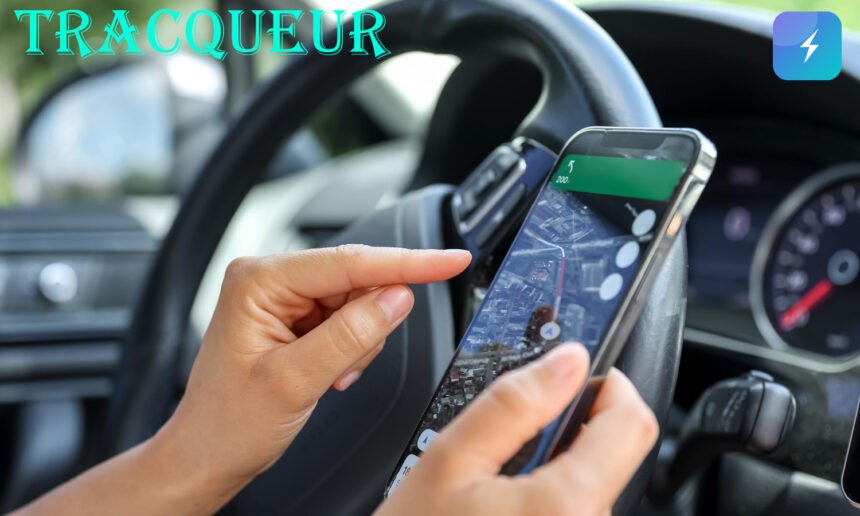
The term Tracqueur has increasingly appeared in online searches connected with tracking, GPS technology, location monitoring, Bluetooth tags, and digital tracking systems. However, there is an important distinction to make at the beginning: available public evidence does not establish Tracqueur as one specific, widely recognized technology product, company, or software platform. Instead, the word is being used online mainly as a broad or alternative term associated with trackers and tracking technology.
That distinction matters because some online descriptions present Tracqueur almost as if it were a single platform with a fixed list of features. There is not enough reliable evidence to support such claims. A more accurate approach is to examine what the term appears to mean, its relationship to the French word traqueur, and the real technologies—such as GPS, Bluetooth, cellular networks, sensors, and software—that modern tracking systems actually use.
This guide explains Tracqueur without assigning it unverified owners, prices, applications, specifications, or capabilities.
What Is Tracqueur?
In current online usage, Tracqueur is best understood as a term associated with tracking or tracker technology rather than a clearly documented technical standard. Depending on the context, people may use it when discussing a device or system that records the location, movement, activity, or status of something.
The spelling requires some clarification. The established French word traqueur comes from traquer, a verb associated with pursuing or tracking. Larousse defines traqueur in established French usage rather than recognizing “Tracqueur” as the name of a modern technology category. This makes it safer to treat “Tracqueur” as an alternative, stylized, or internet-driven spelling whose exact meaning depends on context.
Therefore, someone searching for Tracqueur could actually be interested in GPS tracking, Bluetooth item trackers, vehicle monitoring, asset tracking, fitness wearables, location-sharing applications, or even digital analytics.
Is Tracqueur a Specific Product or Company?
This is one of the most important questions because numerous recent web pages describe Tracqueur in technology-related terms. Yet those descriptions do not establish a single universally recognized product behind the keyword.
Public search results contain conflicting interpretations. Some articles use Tracqueur as a generic name for tracking technology, while others discuss it as an alternative spelling related to traqueur. At least one recent fact-checking article specifically notes the absence of a verifiable company, developer, application listing, or documented technology product matching the broad claims made in some Tracqueur articles.
For that reason, claims that “Tracqueur” has a particular founder, launch date, subscription price, proprietary AI system, mobile application, API, dashboard, or specific technical architecture should not be presented as fact without a primary source. At present, the most defensible interpretation is the general tracking concept.
How Tracking Technology Associated With Tracqueur Works
Although Tracqueur itself is not a documented technical standard, the technologies associated with modern trackers are well established. A tracking system usually begins by determining or detecting something about a device, person, vehicle, animal, or object. It may then store that information locally or transmit it to another device or server.
A location tracker, for example, may determine position using satellite navigation. A Bluetooth tag takes a different approach, communicating over relatively short-range wireless connections and potentially relying on nearby compatible devices to help report its location. Fleet systems may combine satellite positioning with cellular connectivity, while fitness trackers may use accelerometers and other sensors to measure activity.
A useful way to understand the process is as a chain: detect → identify or calculate → transmit → process → display or alert. Not every tracker performs every step in exactly the same way, but this model explains much of modern tracking technology.
GPS and Satellite Positioning
GPS is one of the technologies most strongly associated with location tracking. It should not, however, be confused with a tracking service itself.
According to the official GPS information service of the U.S. government, the Global Positioning System provides positioning, navigation, and timing services. GPS consists of space, control, and user segments. Receivers use signals transmitted by satellites to calculate position and time.
The satellite system determines where a compatible receiver is located, but additional technology is generally required if that location needs to be transmitted elsewhere. For example, a vehicle tracker can calculate its position through satellite signals and then use a cellular connection to send location information to a remote platform.
This distinction is useful when evaluating anything described as a Tracqueur. “Uses GPS” does not automatically mean a device can continuously send its position to another person. Connectivity, software, power availability, hardware design, and network coverage also matter.
Bluetooth Trackers and Short-Range Tracking
Bluetooth is another major technology used in consumer trackers. Small Bluetooth tags are commonly attached to belongings such as keys, bags, or backpacks. Google describes these trackers or tags as small Bluetooth devices that can help users find their belongings.
Bluetooth tracking differs significantly from conventional GPS tracking. A basic Bluetooth tag communicates with nearby compatible devices rather than independently receiving satellite positioning and transmitting its own location over a cellular network. Some commercial ecosystems expand the useful range through networks of participating phones and devices.
This design can reduce the hardware and power requirements of small item trackers, but performance depends heavily on the particular ecosystem and surrounding devices. Consequently, terms such as “real-time,” “worldwide,” and “precise” should never be assumed merely because something is described as a tracker.
Cellular, Wi-Fi, and Connected Tracking Systems
Many modern location systems combine several technologies. Satellite navigation can provide coordinates, while cellular networks can transmit those coordinates to a cloud service. Wi-Fi may contribute connectivity or location-related information in environments where satellite reception is weak or unavailable.
This combination is especially relevant to vehicle, logistics, and asset-monitoring applications. A connected device can periodically collect position information and communicate with a server. Authorized users may then see the data through an application or web dashboard.
The important point is that tracking is an ecosystem rather than a single technology. GPS, Bluetooth, cellular networks, Wi-Fi, sensors, cloud infrastructure, and applications can all play different roles. A Tracqueur-related search may refer to one or several of these technologies depending on what is actually being tracked.
Common Types of Trackers
Because Tracqueur is used broadly online, understanding the established tracker categories is more useful than assuming that every Tracqueur works the same way.
| Tracker Type | Typical Purpose | Common Technology |
|---|---|---|
| GPS tracker | Location and movement monitoring | Satellite positioning |
| Vehicle tracker | Vehicle location and fleet information | GNSS/GPS, cellular connectivity |
| Bluetooth tag | Finding nearby or lost belongings | Bluetooth |
| Fitness tracker | Activity and wellness measurements | Motion and other sensors |
| Pet tracker | Locating or monitoring pets | GPS/GNSS, cellular or Bluetooth |
| Asset tracker | Monitoring valuable equipment or goods | GPS, cellular, Bluetooth or other networks |
| Digital tracker | Measuring online interactions | Cookies, identifiers, pixels or analytics software |
These categories should not be interpreted as confirmed Tracqueur-branded products. They are established examples of technologies that fit the broad tracking meaning currently associated with the keyword.
Practical Uses of Tracking Technology
One of the clearest benefits of modern tracking systems is the ability to locate important belongings. Bluetooth tags, for example, are designed for objects such as keys and bags. Location-capable devices can also help owners locate vehicles, equipment, luggage, or other assets, depending on the product and network involved.
Businesses use tracking for different reasons. Logistics and fleet operations can use location information to understand where vehicles or assets are located. Organizations may also collect operational data to manage equipment and workflows. The exact capabilities depend on the hardware and software chosen.
Tracking also exists outside physical location. Fitness wearables record activity-related information, while websites and applications may collect digital interaction data for analytics or other purposes. These uses demonstrate why “tracker” is a broad concept and why a Tracqueur should always be identified by its specific context before assumptions are made about its capabilities.
Does Tracqueur Use Artificial Intelligence?
There is no reliable evidence establishing that Tracqueur itself is a specific AI-powered product. Therefore, claims about a proprietary Tracqueur AI engine, machine-learning model, automated prediction system, or AI assistant would be speculative without a verified primary source.
Artificial intelligence can nevertheless be incorporated into tracking applications generally. Software may analyze large volumes of sensor or movement data, identify unusual patterns, categorize events, or automate alerts. These are possible applications of AI within the wider tracking industry rather than confirmed Tracqueur features.
This distinction is particularly important for SEO content. Adding fashionable phrases such as “AI-powered Tracqueur technology” may make an article sound sophisticated, but it reduces reliability when there is no evidence behind the statement. Accurate content should separate what tracking technology can do from what a specific named product has actually been proven to do.
Automation and Smart Alerts
Automation is often more relevant to tracking than AI. A tracking platform does not necessarily need machine learning to perform useful automatic actions.
For example, a properly configured system may compare incoming location information with predefined rules and generate an alert when a condition is met. Commercial tracking platforms can also use geofencing, scheduled reporting, status changes, or threshold-based notifications, depending on their documented features.
Again, these are general capabilities found across the tracking industry. They should not be attributed directly to Tracqueur unless an identifiable Tracqueur product provides documentation confirming them.
Understanding this difference helps users avoid confusing ordinary rule-based automation with artificial intelligence.
Integrations and Connected Ecosystems
Integrations can significantly increase the usefulness of a tracking system. A tracker may communicate with a smartphone application, cloud service, fleet-management platform, mapping service, analytics environment, or business system.
However, no verified universal Tracqueur integration list can currently be established. There is insufficient primary documentation to claim that the term refers to a platform supporting specific APIs, mapping providers, operating systems, smart-home services, or enterprise applications.
Anyone evaluating a product sold or promoted under this name should look for official documentation. Useful questions include whether an API exists, which operating systems are supported, whether historical data can be exported, what network is required, and whether integrations need additional subscriptions.
If these details cannot be found in primary documentation, they should be treated as unknown rather than filled in from generic tracker features.
Privacy Is a Major Part of Tracking Technology
Tracking technology creates obvious privacy considerations because location and behavioral information can reveal sensitive patterns about people’s lives.
The European Commission explicitly lists location data as an example of personal data under the GDPR. IP addresses, cookie identifiers, and phone advertising identifiers can also qualify as personal data. Therefore, organizations processing tracking information may have significant privacy responsibilities depending on the jurisdiction, purpose, and circumstances.
A trustworthy tracking service should make it clear what information is collected, why it is collected, where it is processed, how long it is retained, who can access it, and whether it is shared with third parties. Users should not assume that all trackers provide the same privacy protections.
Before using any unfamiliar Tracqueur-branded service, checking its privacy policy and identifying the company operating it would be sensible.
Unwanted Tracking and Personal Safety
Small tracking devices can provide genuine benefits, but the same technology can be abused to follow someone without their knowledge or consent. This has become important enough that major technology companies have developed cross-platform protections.
Apple and Google collaborated on an industry specification designed to detect unwanted Bluetooth location trackers. Apple announced in 2024 that compatible unwanted-tracking alerts were being implemented across iOS and Android, allowing users to receive warnings when an unknown compatible Bluetooth tracker appears to be moving with them over time.
Google also provides unknown-tracker alerts on supported Android devices and explains that trackers can sometimes be misused to follow people without consent.
These developments illustrate an important principle: responsible tracking requires both useful location capabilities and safeguards against misuse.
Security Questions to Ask Before Using a Tracker
Security should be considered separately from privacy. Privacy concerns what information is collected and how it is used; security concerns how that information and the associated systems are protected.
Before choosing any tracking device or platform, users should investigate whether account authentication is available, whether communications are protected, how device access is controlled, and whether the provider publishes a clear security policy. It is also useful to understand what happens if a phone or tracker is stolen.
For an unfamiliar product described as Tracqueur, the same principle applies. Do not assume encryption, secure cloud storage, two-factor authentication, end-to-end protection, or other security features unless the manufacturer explicitly documents them.
A lack of technical information does not prove that a service is unsafe. It simply means its security characteristics cannot be responsibly confirmed from available evidence.
Benefits of Modern Tracking Systems
When appropriately designed and legally used, tracking systems can offer significant practical value. They can make lost belongings easier to locate, provide better visibility into mobile assets, support fleet operations, record movement history, and help users understand certain activities.
Connected systems can also reduce the need for manual status checks. Instead of physically checking where an asset is located, an authorized user may be able to consult a digital interface. In suitable business settings, this can improve visibility and support better operational decisions.
However, the benefits depend heavily on the specific product. A Bluetooth tag designed for keys should not be evaluated as though it were a cellular fleet tracker, and a fitness wearable serves a different purpose again. “Tracqueur” is too broad a term by itself to guarantee any particular benefit.
Limitations of Tracking Technology
No tracking technology works perfectly everywhere. Satellite signals can be affected by environmental conditions and physical obstructions. Bluetooth has range and ecosystem limitations. Cellular trackers depend on network availability, compatible service, and often an active data connection.
Battery life creates another trade-off. Frequent location updates and wireless communication consume energy. A device designed for long battery life may update less frequently, while a system providing frequent communications may require larger batteries or more regular charging.
Accuracy also varies. The position shown by a tracker should not automatically be interpreted as an exact physical point under every condition.
Users should therefore compare products according to their actual use case rather than looking for a vague promise of “perfect” or “real-time” tracking.
What Remains Unknown About Tracqueur
Several details frequently expected in a technology review cannot currently be verified for Tracqueur as a single product.
There is no sufficiently established basis to provide a universal Tracqueur founder, company history, headquarters, launch date, pricing structure, hardware specification, official mobile application, AI architecture, supported integrations, API, data-retention policy, or customer count. Presenting such information without evidence would create a false impression of certainty.
There is also ambiguity around the spelling itself. Established French references recognize traqueur, while “Tracqueur” has developed a visible online presence in recent technology-oriented articles.
Future primary documentation could clarify whether a particular company adopts Tracqueur as a brand. Until then, readers should distinguish the search keyword from documented products that happen to provide tracking functions.
How to Evaluate Something Marketed as Tracqueur
If you encounter a website, application, or device specifically called Tracqueur, start with verification rather than assuming the generic descriptions found online apply to it.
Identify the company or developer and look for an official website, legal entity information where appropriate, privacy policy, terms of service, support documentation, and genuine application-store listings if a mobile app is claimed. For hardware, check the documented connectivity method, battery specifications, operating requirements, compatible networks, and warranty information.
Then determine exactly what kind of tracking is being offered. Is it Bluetooth-based item finding, satellite positioning, cellular vehicle monitoring, web analytics, or something else? The answer changes what performance should reasonably be expected.
Finally, review privacy and security practices before providing location or personal information. These checks are far more valuable than relying on generic articles that describe features without identifying their source.
The Future of Tracking Technology
Tracking systems are likely to become more connected, interoperable, and privacy-aware. One clear example is the cooperation around unwanted Bluetooth tracker detection. Apple and Google have worked on cross-platform protections rather than restricting detection to a single mobile ecosystem.
Future systems may also make greater use of multiple positioning methods, more efficient hardware, automated analysis, and improved integration between devices and software platforms. AI may contribute to data analysis in appropriate applications, but it should not be treated as an automatic feature of every tracker.
Privacy and anti-abuse mechanisms are also likely to remain central considerations. Better tracking capability increases usefulness, but it simultaneously raises the importance of consent, transparency, access controls, data minimization, and protection against covert tracking.
Whether the word Tracqueur develops into a recognized product name or remains a broad internet term is still unclear.
Bottom Line
Tracqueur is best treated as an emerging or alternative term associated with trackers and tracking technology, not as a single established technology platform with a universally verified set of features. The established French spelling traqueur has meanings connected with tracking or pursuit, while recent online usage of “Tracqueur” often connects the term with GPS, Bluetooth, location monitoring, and other tracking systems.
The technologies behind real trackers are well understood. GPS can provide positioning information, Bluetooth can support small item-tracking devices, cellular networks can transmit location data, and software can turn collected information into maps, histories, reports, and alerts. Yet these general capabilities should not be automatically attributed to a product simply called Tracqueur.
For anyone researching the term, the safest approach is to identify the exact device, website, software, or context involved. Verify claims through primary documentation, examine privacy and security practices, and be cautious when an article supplies precise features, pricing, AI capabilities, or company information without a traceable source.
That distinction produces a more accurate picture of Tracqueur while still explaining the real and rapidly evolving world of modern tracking technology.
Frequently Asked Questions
What does Tracqueur mean?
Tracqueur is currently used online mainly in connection with trackers, location monitoring, and tracking technology. The established French word traqueur is related to traquer, meaning to pursue or track, but “Tracqueur” should not automatically be assumed to identify one specific technology product.
Is Tracqueur a GPS tracker?
Not necessarily. GPS tracking is one possible interpretation associated with the keyword, but no evidence supports defining every use of “Tracqueur” as a particular GPS device. The context in which the word appears is essential.
Is Tracqueur an AI platform?
There is currently insufficient reliable evidence to identify Tracqueur generally as a specific AI platform. AI can be used in tracking and data-analysis systems, but that does not prove that something called Tracqueur has proprietary AI capabilities.
What technologies can modern trackers use?
Depending on their purpose, tracking systems can use GPS or other satellite-navigation systems, Bluetooth, cellular networks, Wi-Fi, sensors, cloud services, and mobile applications. Different combinations are appropriate for different tracking tasks.
Can trackers work without GPS?
Yes. Bluetooth item tags are an important example. Google describes trackers or tags as small Bluetooth devices that can be attached to belongings and used to help locate them. Other tracking systems may use Wi-Fi, network information, sensors, or different positioning methods.
Are tracking devices safe to use?
Legitimate tracking devices can be useful when used responsibly, but privacy and security depend on the specific product and how it is used. Tracking people without their knowledge can create serious privacy and safety concerns. Cross-platform unwanted-tracker alerts have been developed specifically to address some forms of misuse.
What should I check before using a Tracqueur service or device?
First verify who operates or manufactures it. Then examine its official documentation, tracking method, connectivity requirements, privacy policy, security protections, data handling, compatibility, support options, and any recurring fees. Avoid relying on feature claims that cannot be traced to an official or otherwise reliable source.