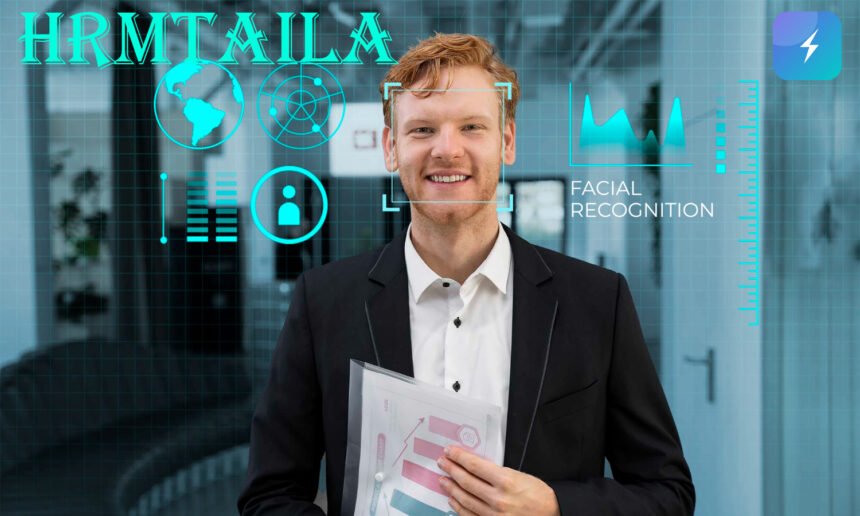
HRMtaila is an emerging online term associated with artificial intelligence, human resource management, workplace automation, and digital HR technology. The keyword has recently appeared in articles discussing how AI could help organizations manage recruitment, employees, administrative work, workforce information, and other human-resource processes. However, there is an important distinction between the broader technology being discussed and HRMtaila itself.
At present, publicly available information does not provide strong primary evidence that HRMtaila is an established commercial software platform, registered company, recognized HR methodology, or official technology standard. Recent coverage generally interprets it as a term connected with AI-assisted human resource management. There is no widely documented official definition, founder, developer, launch date, pricing structure, or product documentation behind the name.
That uncertainty makes HRMtaila worth examining carefully. The technologies commonly associated with the term—AI, automation, workforce analytics, cloud HR systems, and digital employee services—are real and increasingly important. But features belonging to modern HR technology in general should not automatically be presented as confirmed HRMtaila features.
This guide separates what can currently be verified from what remains unclear and explains how the broader AI-powered HR model associated with HRMtaila could work.
What Is HRMtaila?
HRMtaila does not currently have a universally accepted definition. The most consistent interpretation found across recent online sources connects the term with AI-powered or AI-assisted human resource management. Under this interpretation, it represents the idea of combining traditional HR functions with automation, data analysis, and artificial intelligence.
Human resource management covers many parts of the relationship between an organization and its workforce. Recruitment, onboarding, employee records, attendance, performance, training, compensation administration, and workplace policies can all fall within the HR function. Modern HR technology attempts to organize these activities digitally and reduce repetitive administrative work.
Artificial intelligence adds another layer. Instead of software simply storing records or following fixed workflows, AI systems may analyze information, classify documents, assist with searches, answer routine questions, summarize data, or identify patterns for human review.
This is the broader technological context in which HRMtaila is currently being discussed. It should not, however, be interpreted as proof that one specific product called HRMtaila provides all of these capabilities.
Is HRMtaila a Real Software Platform?
This is one of the most important questions surrounding the keyword.
As of the currently available public information, there is insufficient reliable evidence to identify HRMtaila as an established commercial HR software platform. Searches and recent coverage have not established a clear official developer, company history, product documentation, verified customer base, pricing page, or recognized software distribution channel.
That does not prove that no private project, early-stage product, or future service can use the name. It simply means claims about a specific HRMtaila platform should not be treated as verified without stronger primary evidence.
This distinction prevents a common research problem. Once an unfamiliar keyword begins appearing on multiple websites, repeated descriptions can create the impression that a fully documented product exists. Repetition is not the same as independent verification.
For that reason, claims that HRMtaila has a particular dashboard, proprietary AI engine, mobile application, payroll module, subscription plan, API, customer list, or integration should be treated as unconfirmed unless they can be traced to credible primary documentation.
What Is the Purpose Behind the HRMtaila Concept?
The broader idea associated with HRMtaila is straightforward: use digital technology to make human-resource processes more organized, efficient, and useful.
Traditional HR work can involve substantial administrative effort. Teams may process applications, maintain employee records, answer repeated questions, prepare reports, coordinate onboarding, manage leave requests, monitor training, and support managers across an organization.
Automation can reduce some repetitive steps. AI can potentially assist with tasks that require searching, organizing, summarizing, classifying, or analyzing larger amounts of information.
The goal should not necessarily be to remove people from HR decision-making. Employment decisions affect real people and can carry significant ethical and legal consequences. A safer model is one in which technology handles appropriate administrative or analytical tasks while qualified people retain oversight and responsibility.
This is especially important in recruitment, promotion, performance evaluation, and other decisions that can directly affect employment opportunities.
How Could an AI-Powered HR System Like the HRMtaila Concept Work?
Because there is no verified technical architecture for HRMtaila itself, its operation cannot be described as a confirmed product workflow. However, existing AI-supported HR systems provide a useful model for understanding the concept.
A digital HR environment normally begins with structured employee and organizational information. Depending on the system, that could include job applications, employee profiles, roles, departments, attendance information, training records, benefits information, or performance-related records.
Automation can then connect information to workflows. A new hire, for example, might trigger document requests, account-setup tasks, training assignments, policy acknowledgments, and reminders.
AI may sit on top of selected workflows. It could help classify information, search knowledge bases, summarize documents, support employee-service chat interfaces, or identify trends in workforce data.
The important point is that AI does not magically make HR information correct. Its usefulness depends on the quality of the underlying data, system design, organizational rules, human oversight, and safeguards around how outputs are used.
Recruitment and Candidate Management
Recruitment is one of the most frequently discussed applications of AI in human resources.
Organizations can receive large numbers of applications, particularly for popular positions. Digital recruitment tools can help collect applications, organize candidate information, schedule interviews, communicate status updates, and maintain records.
AI can potentially assist with matching job-related information or helping recruiters search a candidate pool. However, automated employment decisions require careful governance.
The U.S. Equal Employment Opportunity Commission notes that employment practices must not unlawfully discriminate against applicants or employees, and even apparently neutral practices can create legal concerns when they disproportionately harm protected groups without appropriate job-related justification.
Therefore, an AI-supported recruitment system should not simply be considered trustworthy because it is automated. Employers still need appropriate criteria, monitoring, validation, accessibility, human review, and compliance with applicable employment law.
Employee Onboarding and Routine Administration
Onboarding is another area where automation can provide practical value without requiring AI to make sensitive decisions.
When someone joins an organization, HR may need to collect documents, share policies, coordinate training, provide internal information, and make sure several departments complete their responsibilities.
A digital workflow can automate reminders and track whether required steps have been completed. An employee portal can give new hires access to approved information without requiring HR staff to manually answer every routine question.
AI assistants may also help employees navigate large internal knowledge bases. For example, a properly configured system could direct an employee toward an approved leave policy or explain where to find a particular form.
Again, these are capabilities of modern HR technology generally. They should be viewed as examples of what the HRMtaila concept could represent, not confirmed features of a specific HRMtaila product.
Workforce Analytics and Decision Support
Organizations generate significant workforce data. Used responsibly, analytics can help leaders understand patterns involving staffing, recruitment, training, turnover, scheduling, or other organizational needs.
Traditional analytics often rely on predefined reports and dashboards. AI can potentially make analysis more flexible by finding patterns across larger datasets or allowing users to query information in more natural ways.
The benefit is not simply producing more data. The real value comes from turning appropriate data into information that qualified managers can understand and use responsibly.
There are also limitations. A statistical relationship does not automatically explain why something happened. Historical workplace data may contain existing inequalities or incomplete information. An algorithm trained on problematic data can reproduce or amplify those problems.
For this reason, analytics should support informed human judgment rather than being treated as an unquestionable source of truth.
Performance Management and Employee Development
Digital systems can also support performance-management processes by storing goals, feedback, review cycles, development plans, and training information.
AI could potentially summarize large collections of approved feedback, identify missing information, recommend learning resources, or help managers organize development conversations.
However, performance assessment is a particularly sensitive use case. Human performance cannot always be reduced to easily measurable numbers. Context, job responsibilities, team conditions, accommodations, and the quality of available information can all matter.
An organization using AI in this area should therefore understand what the system measures, what information it ignores, how recommendations are generated, and whether employees have meaningful ways to question incorrect information.
Payroll, Attendance, and Workforce Operations
Some articles discussing HRMtaila associate the term with payroll and attendance management. These capabilities are common within the wider HR-software market, but there is currently no reliable primary evidence confirming a specific HRMtaila payroll or attendance product.
In general, HR systems can help maintain working-time information, leave records, schedules, and data needed for payroll processes. Automation may reduce duplicate data entry and routine calculations when systems are configured correctly.
Payroll is also an area where accuracy is critical. Tax rules, wage requirements, deductions, benefits, and employment regulations can vary by jurisdiction. Businesses should therefore verify any payroll software’s legal and operational capabilities rather than assuming that an AI label makes the system suitable for their location.
AI and Automation in HRMtaila
Artificial intelligence is the central idea behind many online descriptions of HRMtaila, but “AI-powered” can mean many different things.
One system might use machine learning to categorize applications. Another might use natural-language processing for an employee chatbot. A third might use generative AI to summarize documents. Calling all three systems “AI HR software” provides very little information about their actual capabilities.
Businesses evaluating any future service presented as HRMtaila should ask exactly what AI technology is being used, what data it processes, what decisions it influences, and how its outputs are tested.
NIST’s AI Risk Management Framework provides a useful broader model for thinking about such systems. It focuses on managing risks and encouraging characteristics such as reliability, safety, security, accountability, transparency, explainability, privacy, and fairness. NIST organizes its AI risk-management approach around four broad functions: Govern, Map, Measure, and Manage.
These principles are especially relevant when AI affects workers or job applicants.
Integrations and Technical Infrastructure
Modern HR systems rarely operate completely alone. Organizations may need HR technology to exchange information with payroll providers, identity systems, applicant-tracking tools, accounting platforms, learning systems, calendars, communication software, or other business applications.
Common integration methods can include APIs, standardized data exports, webhooks, or vendor-specific connectors.
However, no verified integration catalog or API documentation has been established for HRMtaila. Therefore, it would be inaccurate to claim that HRMtaila officially connects with particular third-party platforms.
If a commercial HRMtaila product emerges, integration documentation would be an important sign of maturity. Businesses should check exactly what information an integration can access, whether synchronization is one-way or two-way, how authentication works, and what happens when an integration fails.
Security and Privacy Considerations
Security is particularly important for HR technology because employee systems can contain sensitive personal and professional information.
A responsible HR platform should clearly explain what information it collects, why it collects it, where information is processed, how long records are retained, who can access them, and what security controls protect them.
Depending on the product and organization, relevant safeguards could include access controls, encryption, authentication measures, audit logging, backup processes, incident-response procedures, and carefully managed administrator permissions.
AI creates additional questions. Businesses need to know whether employee information is sent to external AI providers, whether data can be used to train models, how outputs are stored, and whether confidential information could appear in inappropriate contexts.
No official HRMtaila security certifications, privacy documentation, data-processing terms, or compliance claims have been reliably established in the currently available public information. Those details should therefore remain classified as unknown rather than assumed.
Potential Benefits of the HRMtaila Approach
If HRMtaila is interpreted as a concept for responsible AI-assisted HR management, several potential benefits are easy to understand.
Automation can reduce repetitive administrative work and allow HR professionals to spend more time on activities requiring human judgment. Centralized digital records can make approved information easier to find. Employee self-service can reduce routine support requests. Analytics can help organizations recognize workforce patterns that would be difficult to identify manually.
AI may also improve access to internal information by allowing employees or managers to ask questions in ordinary language rather than searching through numerous documents.
These benefits are possibilities rather than guarantees. Technology produces value only when it solves an actual organizational problem and is implemented correctly.
Limitations and Risks
The uncertainty surrounding HRMtaila itself is currently its biggest limitation. Without verified primary product documentation, buyers cannot meaningfully evaluate its real functionality, reliability, support, pricing, integrations, or security.
AI-powered HR technology also introduces broader risks.
Poor-quality data can produce poor recommendations. Automated systems can introduce or reproduce bias. Employees may not understand why a system produced a particular result. Excessive monitoring can damage workplace trust. Weak security can expose sensitive information.
There is also the danger of automation bias—the tendency to assume a computer-generated recommendation is correct simply because it came from a sophisticated system.
NIST emphasizes that AI risk management should address trustworthiness throughout the lifecycle of an AI system rather than being treated as a one-time exercise.
For HR applications, that means testing and oversight should continue after deployment.
What Is Still Unknown About HRMtaila?
A significant amount remains unverified.
There is currently no sufficiently documented official meaning of the name, recognized founder, confirmed company identity, verified headquarters, authoritative launch history, official pricing structure, confirmed mobile application, documented API, established integration list, verified customer base, or independently established technical architecture.
Likewise, there is insufficient primary evidence to confirm specific claims about proprietary AI models, payroll capabilities, recruitment engines, employee dashboards, or analytics modules.
These gaps should not be filled with assumptions.
If authoritative documentation appears in the future, the factual picture may change. Until then, the most accurate description is that HRMtaila is an emerging online term associated with AI-assisted human resource management rather than a clearly verified commercial platform.
How to Evaluate a Service Using the HRMtaila Name
Anyone considering software marketed under this term should evaluate the actual provider rather than relying on articles about the keyword.
Start by identifying the legal business or developer behind the service. Look for official product documentation, terms of service, privacy information, security details, customer-support channels, and a clear explanation of pricing.
Ask for a demonstration of the actual product. Verify important features instead of relying only on marketing descriptions.
For AI features, determine what information is processed, which AI models or external providers are involved, how outputs are evaluated, and whether a person can review or override important recommendations.
Organizations should also examine their own legal obligations before deploying AI in employment-related processes. Employment, privacy, data-protection, and AI rules can differ substantially between countries and jurisdictions.
Future Possibilities for HRMtaila
HRMtaila’s future is difficult to predict because its identity has not yet been formally established.
The term could eventually become associated with a specific software product. It could remain a niche label for AI-powered HR concepts, or online interest could decline as other terminology becomes more common.
The broader trend behind it is much clearer. AI is becoming part of business software, and human resources is one area where organizations are exploring automation, conversational interfaces, analytics, and decision-support tools.
Future HR systems may make it easier to search organizational knowledge, automate administrative workflows, analyze workforce information, personalize employee services, and support managers.
But greater technical capability also increases the need for accountability. The most valuable HR technology will not necessarily be the system that automates the most decisions. It may be the one that combines useful automation with security, transparency, fairness, reliable data, and meaningful human control.
Bottom Line
HRMtaila is best understood today as an emerging online term connected with artificial intelligence and modern human resource management. It is commonly associated with ideas such as recruitment automation, employee administration, workforce analytics, onboarding, performance support, and AI-assisted HR services.
What should not be assumed is that all of these capabilities belong to a verified product called HRMtaila.
Current public information does not provide enough authoritative evidence to establish HRMtaila as a mature commercial software platform with a confirmed company, developer, feature set, pricing model, integrations, or security certifications.
The technology behind the broader concept is real, and AI-assisted HR systems can offer meaningful benefits. They can also create privacy, security, fairness, accuracy, and governance risks. Businesses considering any HR technology—whether marketed as HRMtaila or under another name—should verify the provider, understand exactly what its AI does, examine its data practices, and retain appropriate human oversight.
Until stronger primary documentation becomes available, that evidence-based distinction is the safest and most accurate way to understand HRMtaila.
Frequently Asked Questions
What is HRMtaila?
HRMtaila is an emerging online term generally associated with AI-assisted human resource management, workplace automation, and digital HR technology. It does not currently have one authoritative official definition.
Is HRMtaila a real HR software platform?
There is currently insufficient reliable public evidence to confirm HRMtaila as an established commercial software platform with a verified developer, official documentation, pricing, and customer base.
What does HRMtaila do?
No specific feature set can currently be confirmed. Online discussions associate the term with broader HR activities such as recruitment, onboarding, employee management, analytics, and automation, but these should not be presented as verified product features.
Does HRMtaila use artificial intelligence?
HRMtaila is widely discussed in connection with AI-powered HR management. However, no authoritative technical documentation has been identified that confirms a specific proprietary HRMtaila AI system or explains its architecture.
Is HRMtaila safe to use?
There is not enough verified product information to make a general safety judgment about a specific HRMtaila service. Any platform using the name should be independently evaluated for security, privacy, company identity, data handling, legal compliance, and technical reliability before sensitive employee information is provided.
Can AI replace human HR professionals?
AI can automate or assist with some administrative, analytical, and information-retrieval tasks, but employment decisions involve legal, ethical, interpersonal, and contextual considerations. Human oversight remains particularly important when technology influences hiring, promotion, performance, or other significant employment decisions.
What should businesses check before using AI-powered HR software?
Businesses should verify the provider, product documentation, privacy terms, security practices, data retention, AI functionality, integrations, support, and applicable legal requirements. They should also understand how automated recommendations are reviewed and how errors, bias, or incorrect employee information can be challenged and corrected.