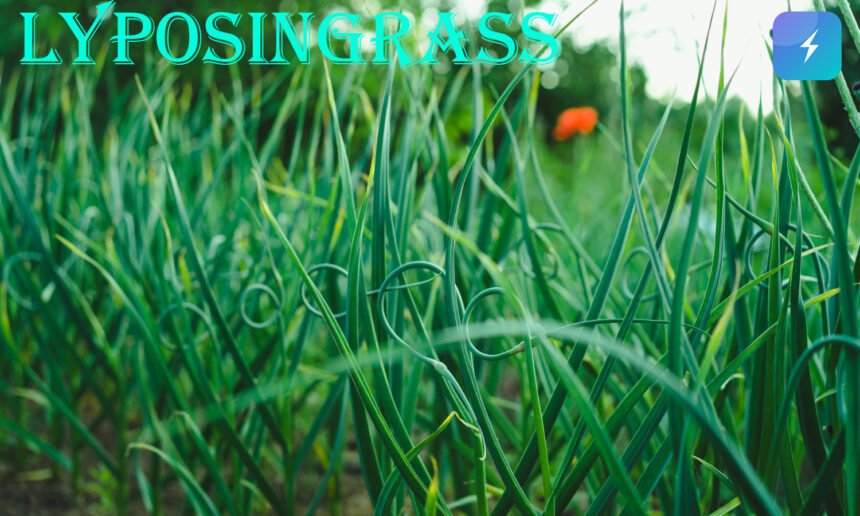
Lyposingrass is a term that has recently begun appearing across websites, search results, wellness discussions, and plant-related content. At first glance, the word sounds like the established name of a grass, herb, supplement ingredient, or botanical product. Search for it online, however, and a confusing picture quickly emerges. Different pages give very different explanations of what lyposingrass supposedly is.
Some online sources describe lyposingrass as a wellness ingredient. Others associate it with ornamental grasses, lemongrass, or grass-like plants. Still others discuss teas, powders, nutritional properties, gardening applications, or possible health benefits. The problem is that these descriptions do not point back to one clearly identified plant species or standardized ingredient.
As of 2026, the most important fact about lyposingrass is therefore its uncertainty. Searches of major scientific and botanical sources do not establish “lyposingrass” as a recognized botanical name, medical treatment, or scientifically defined ingredient. That does not necessarily mean every product or page using the term is fraudulent. It means the name itself is not enough to establish what substance, plant, or product is actually being discussed.
This guide separates what can currently be verified from what remains unclear, explains why the term is attracting attention, and provides practical guidance for anyone who encounters lyposingrass online or on a product label.
What Is Lyposingrass?
There is currently no single scientifically established definition of lyposingrass.
The word does not appear to correspond to an accepted botanical species name. It also does not appear to be a standard medical diagnosis, pharmaceutical ingredient, or recognized scientific term. Searches for the exact term in major scientific and biomedical databases do not provide evidence establishing lyposingrass as a defined plant or medically validated substance.
That distinction matters because real plants can normally be identified through a scientific name consisting of a genus and species. A common name may vary from region to region, but researchers, growers, health professionals, and regulators can still trace the plant back to an accepted taxonomic identity.
Lyposingrass currently lacks that clear connection.
Instead, the term appears mainly in relatively recent online content. Some websites acknowledge the uncertainty and describe it as an emerging or informal internet term. Other pages make much more specific claims about its appearance, nutrients, growing conditions, or health properties without providing enough primary scientific evidence to establish that they are all discussing the same plant.
For readers, the safest interpretation is simple: lyposingrass should currently be treated as an unverified or ambiguous term rather than the established name of a particular botanical species.
Why Is There So Much Confusion Around Lyposingrass?
The main problem is inconsistency.
If several reliable botanical references describe a plant, their basic information should agree. They might differ slightly on growing advice or traditional applications, but the species identity, classification, physical characteristics, and botanical relationships should remain broadly consistent.
Online descriptions of lyposingrass do not show that consistency.
One explanation links the term to grass-like ornamental plants. Another interpretation associates it with lemongrass or tropical grasses. Wellness-focused content may present it as a green ingredient that can supposedly be consumed in powders, teas, or supplements. Some sources treat the word more generally as an internet-created name.
These cannot automatically be combined into one profile.
Lemongrass and Liriope, for example, are not simply interchangeable names for the same plant. Assigning the properties of one established species to an undefined term can create inaccurate information.
This is why a responsible article about lyposingrass must distinguish between documented facts and online claims instead of constructing a detailed botanical profile from conflicting sources.
Is Lyposingrass a Real Plant?
There is currently insufficient reliable evidence to identify lyposingrass as the accepted common or scientific name of a distinct plant species.
This does not prove that nobody uses the term locally, commercially, or informally. Common plant names can be extremely flexible. A seller might invent a trade name, a community may use a regional nickname, or a brand could market a mixture under a name that does not appear in botanical databases.
The missing piece is a verified botanical identity.
For a plant marketed as lyposingrass, useful identifying information would include:
- Scientific genus and species
- Plant family
- Country or region of origin
- Identifiable physical characteristics
- Cultivar information, if applicable
- Plant part being used
- Manufacturer or grower details
- Supporting botanical documentation
Without those details, statements such as “lyposingrass is a tropical herb” or “lyposingrass belongs to a particular plant family” should not be presented as established facts.
Is Lyposingrass the Same as Lemongrass?
Some online discussions connect lyposingrass with lemongrass, but this association should not be treated as confirmed.
Lemongrass is a genuine and well-documented plant. The name commonly refers to species within the genus Cymbopogon, including Cymbopogon citratus. It has a recognized botanical identity and a documented history of culinary and traditional uses.
Lyposingrass does not currently have equivalent scientific documentation connecting the exact term to Cymbopogon citratus.
The similarity may result partly from the word “grass.” That alone is not evidence of botanical relationship. Thousands of plants have grass-like leaves or common names containing “grass,” even when their taxonomy and properties differ considerably.
If a website says that lyposingrass is lemongrass, readers should look for a scientific name. If the product actually lists Cymbopogon citratus, information about that species can be evaluated separately. Without such identification, the two terms should not automatically be considered synonyms.
Is Lyposingrass Related to Liriope or Lilyturf?
Another online interpretation describes lyposingrass as a name for Liriope, particularly grass-like ornamental plants used in landscaping.
Liriope is real. Species such as Liriope muscari and Liriope spicata are established plants with recognizable botanical identities. They are often grown as ground covers or border plants because of their narrow foliage and ornamental appearance.
However, the existence of Liriope does not demonstrate that “lyposingrass” is an accepted common name for it.
This distinction becomes particularly important when gardening information and health information overlap. An ornamental plant should never be assumed to be edible merely because another website uses the same ambiguous internet term for a supposed wellness ingredient.
If someone wants to grow a plant sold as lyposingrass, identifying its scientific name before following species-specific cultivation advice is the sensible approach.
Where Did the Term Lyposingrass Come From?
The precise origin of the word remains unclear.
Current online evidence does not establish a recognized researcher, botanical authority, manufacturer, historical text, or organization responsible for introducing the term. It appears to have gained visibility through web content rather than through conventional botanical or scientific classification.
It is tempting to break the word into pieces and infer a meaning. For example, some people might associate “lypo” with “lipo,” a prefix connected with fat in scientific terminology, while “grass” naturally suggests a plant.
But word resemblance is not scientific evidence.
Without documented etymology, claiming that the name was intentionally created to describe fat metabolism, weight management, or a particular plant would be speculation.
The origin should therefore remain classified as unknown unless stronger primary evidence emerges.
Why Is Lyposingrass Appearing in Wellness Content?
The wellness industry frequently uses memorable names for botanical mixtures, powders, extracts, and other products. A commercial name does not have to match the scientific name of an ingredient.
That may explain some uses of lyposingrass, but it creates a verification problem.
A product name tells consumers very little about what is inside. If “Lyposingrass” appears on packaging, the useful information is the ingredient panel behind the marketing name.
Consumers should look for the actual plant species, amount per serving, other ingredients, manufacturer details, warnings, testing information, and relevant regulatory labeling.
Until those details are available, broad wellness statements attached to the word lyposingrass cannot automatically be attributed to a specific substance.
Claimed Health Benefits of Lyposingrass
Online articles have associated lyposingrass with various wellness benefits. These may include digestive support, antioxidant effects, improved energy, immune support, detoxification, or weight-related benefits.
These claims require considerable caution.
There is currently no clearly defined substance called lyposingrass for which a reliable body of clinical evidence can be evaluated. Before researchers can determine whether something improves digestion or influences another health outcome, they first need to know exactly what substance is being tested.
The lack of a standardized identity makes broad benefit claims especially problematic.
Even if a product marketed under the name contains a legitimate herb, evidence concerning that particular herb would apply to the identified ingredient—not automatically to everything called lyposingrass.
Therefore, statements that lyposingrass has clinically proven health benefits should not be accepted without evidence identifying both the substance and the research supporting the claim.
Nutritional Claims Need Similar Caution
Some descriptions portray lyposingrass as a nutrient-rich green ingredient and associate it with fiber, vitamins, minerals, chlorophyll, antioxidants, or plant compounds.
Green plants certainly can contain many of these components. But that general fact cannot establish the nutritional composition of an unidentified plant.
Nutrient levels vary enormously according to species, plant part, soil, maturity, processing, storage, serving size, and laboratory methodology.
A credible nutritional claim should therefore be linked to a specific sample or clearly identified species and preferably supported by laboratory analysis.
Numbers presented without a traceable source should not be interpreted as an established nutritional profile for lyposingrass.
Can Lyposingrass Help With Weight Loss?
The name may lead some people to associate lyposingrass with weight loss because “lypo” resembles terminology involving lipids or fat. However, the similarity of a name does not establish a biological effect.
There is currently insufficient reliable evidence to describe lyposingrass itself as a proven weight-loss treatment.
Weight management is influenced by diet, energy intake, activity, sleep, medical conditions, medications, genetics, and numerous behavioral factors. Claims that an undefined herb can directly “burn fat” or produce rapid weight loss deserve particular skepticism.
If a commercial product using the lyposingrass name makes weight-loss claims, consumers should evaluate its actual ingredients rather than relying on the product name.
This is especially important because supplements can contain multiple active substances, each with different effects, contraindications, and potential interactions.
How Is Lyposingrass Supposedly Used?
Online descriptions vary widely enough that there is no standardized method of using lyposingrass.
Depending on the source, the word may be associated with:
- Herbal or wellness products
- Powders and supplement-style preparations
- Tea or beverage ingredients
- Plants used for landscaping
- Grass-like ornamental ground cover
- A general online concept rather than a particular physical product
These categories should not be mixed.
A landscaping plant, for instance, cannot be considered suitable for tea simply because a separate article describes an ingredient with the same ambiguous name. Likewise, dosage instructions from one seller should not be applied to an unrelated product.
The exact identity must come first; usage instructions come second.
Safety and Possible Risks
Because lyposingrass lacks a standardized identity, it is impossible to establish one universal safety profile.
Safety depends on what a particular product actually contains.
An unidentified botanical product could potentially cause allergic reactions, gastrointestinal effects, interactions with medicines, contamination problems, or effects related to another ingredient in a blend. The level of risk varies considerably from one substance to another.
People who are pregnant or breastfeeding, have chronic medical conditions, take prescription medicines, are preparing for surgery, or have known plant allergies should be particularly cautious with poorly identified supplements.
Children should also not be given an unidentified herbal preparation merely because it is described online as “natural.”
“Natural” is not the same thing as proven safe.
If lyposingrass appears on a supplement or herbal product, a pharmacist, doctor, or another appropriately qualified professional can assess the actual ingredient list more meaningfully than the marketing name alone.
How to Evaluate a Product Labeled Lyposingrass
Anyone considering purchasing such a product should investigate what the name represents before using it.
Start with the ingredient label. Look for a Latin botanical name rather than relying entirely on a common or branded name. Determine which part of the plant is present, such as the leaf, root, seed, stem, or extract.
Next, check the manufacturer. A legitimate product should provide meaningful company and contact information rather than relying solely on promotional language.
Also examine the claims carefully. Statements promising rapid fat loss, cures, guaranteed detoxification, treatment of diseases, or dramatic results should raise questions, particularly when no credible clinical evidence is provided.
For supplements, independent quality testing can provide useful information about identity and contamination, although certification itself does not prove that a product produces every advertised health benefit.
Most importantly, do not assume that two products called lyposingrass contain the same thing.
Technology, AI, and Automation: Are They Relevant?
There is no verified evidence that lyposingrass itself represents a technology platform, AI system, software product, or automated service.
Artificial intelligence may nevertheless be indirectly relevant to the spread of the term.
Modern websites can publish large volumes of content quickly, and automated content systems can amplify poorly documented terminology. Once several pages repeat a term, search results may make it appear established even when the underlying information remains uncertain.
This creates an important lesson for online research: repetition is not the same as verification.
Ten websites repeating an unsupported botanical description do not provide the same level of evidence as a recognized botanical database, peer-reviewed study, authenticated specimen, or clearly documented manufacturer.
Readers researching unfamiliar terms should therefore trace claims back to their original evidence whenever possible.
Integrations, Platforms, and Digital Features
There are no verified software integrations, applications, APIs, digital platforms, automation tools, or technical features that can reliably be attributed to lyposingrass as a defined entity.
Such categories make sense when researching a software company or digital service, but forcing them into an article about an ambiguous botanical or wellness term would create misleading information.
If a future company or technology product adopts Lyposingrass as a brand name, its capabilities would need to be evaluated separately from the current plant- and wellness-related search term.
Privacy and Security Considerations
A plant does not have digital privacy or cybersecurity features. However, consumers purchasing products from unfamiliar websites should still consider ordinary online-shopping security.
Check whether the seller clearly identifies the business, explains its refund and shipping policies, provides secure payment processing, and publishes understandable privacy terms.
Avoid providing unnecessary personal information to an unknown seller simply because a product is trending.
These precautions relate to the website or merchant—not to lyposingrass itself.
What Is Verified and What Remains Unconfirmed?
The most useful way to understand the subject is to separate the two categories.
Reasonably supported information:
The exact word “lyposingrass” does not currently have a widely recognized scientific botanical or medical definition. Recent online sources use the term inconsistently. Some connect it with wellness products, while others associate it with established plants such as lemongrass or Liriope. Searches of major scientific and biomedical databases do not establish the exact term as a defined clinical substance.
Unconfirmed information:
A specific species called lyposingrass, its country of origin, discoverer, chemical composition, nutritional profile, medicinal effects, recommended dosage, standardized cultivation requirements, proven weight-loss properties, or universally accepted uses have not been reliably established.
Keeping these categories separate prevents assumptions from gradually being repeated as facts.
Could Lyposingrass Become a Recognized Term in the Future?
It is possible, although its future meaning cannot currently be predicted.
New commercial and common names emerge regularly. A manufacturer could register or popularize Lyposingrass as a brand. Researchers could document a regional plant name that happens to use similar wording. A horticultural business could adopt it for a cultivar or product.
Alternatively, the term may simply remain an internet keyword whose definition changes from one website to another.
For lyposingrass to become genuinely useful as a botanical term, it would need a consistent connection to an identifiable plant. For it to become meaningful as a supplement category, manufacturers would need transparent ingredient information and evidence relating to those ingredients.
Until then, uncertainty is part of the definition rather than a detail that should be hidden.
Practical Guidance for Readers
If you encounter lyposingrass in an article, advertisement, social post, or product listing, do not begin by asking whether lyposingrass “works.” Begin by asking what exactly the word represents in that context.
For a plant, request its scientific name.
For a supplement, read the complete ingredient list and identify the manufacturer.
For a health claim, look for human research involving the exact identified ingredient rather than research about vaguely similar plants.
For gardening advice, establish the species before deciding on soil, sunlight, watering, pruning, or climate requirements.
And if the word appears to be a typo, check the surrounding context. The intended term may be an entirely different established plant, ingredient, product, or medical concept.
This approach is more reliable than choosing whichever online definition appears first.
Bottom Line
Lyposingrass is attracting online attention, but the available evidence does not support presenting it as a clearly established plant species, medical treatment, nutritional ingredient, or standardized supplement.
The most noticeable feature of the term is actually the disagreement surrounding it. Different websites associate lyposingrass with different plants and wellness concepts, while authoritative scientific searches do not provide a matching standardized identity.
That does not mean every mention of lyposingrass is meaningless. It could function as a commercial label, informal name, emerging internet term, or mistaken spelling. What matters is identifying what a particular source means when it uses the word.
Consumers should be especially cautious about health, nutritional, detox, or weight-loss claims made without a scientific plant name, transparent ingredients, or supporting research. Gardeners should similarly avoid applying species-specific growing instructions until the plant has been properly identified.
For now, the most accurate description is straightforward: lyposingrass is an ambiguous online term whose exact botanical, nutritional, and medical identity has not been reliably established.
Frequently Asked Questions
What is lyposingrass?
Lyposingrass is an emerging and poorly defined term found mainly in online content. There is currently no widely accepted scientific definition establishing it as one specific plant, medicine, or ingredient.
Is lyposingrass a real plant?
There is insufficient authoritative evidence to recognize lyposingrass as the accepted name of a distinct botanical species. Some websites connect the term with existing plants, but those associations are inconsistent.
Is lyposingrass the same as lemongrass?
This has not been established. Lemongrass refers to recognized plants in the Cymbopogon genus, while lyposingrass currently lacks a confirmed botanical identity connecting it to those species.
Does lyposingrass help with weight loss?
There is no reliable evidence establishing lyposingrass itself as a clinically proven weight-loss treatment. Consumers should be cautious about fat-burning or rapid weight-loss claims attached to an unidentified ingredient.
Can you eat or drink lyposingrass?
Not based on the name alone. Because the exact plant or ingredient represented by lyposingrass is unclear, it should not automatically be considered edible. The actual botanical identity and product ingredients need to be established first.
Is lyposingrass safe?
A universal safety assessment cannot be made without knowing what substance the term represents. Anyone considering a supplement marketed under this name should check its complete ingredients, manufacturer information, warnings, and possible medication interactions.
Why is lyposingrass becoming popular online?
The unusual name and conflicting explanations surrounding it appear to be generating search interest. Repetition across websites can increase the visibility of an unfamiliar term, but online popularity alone does not establish scientific validity or a standardized definition.