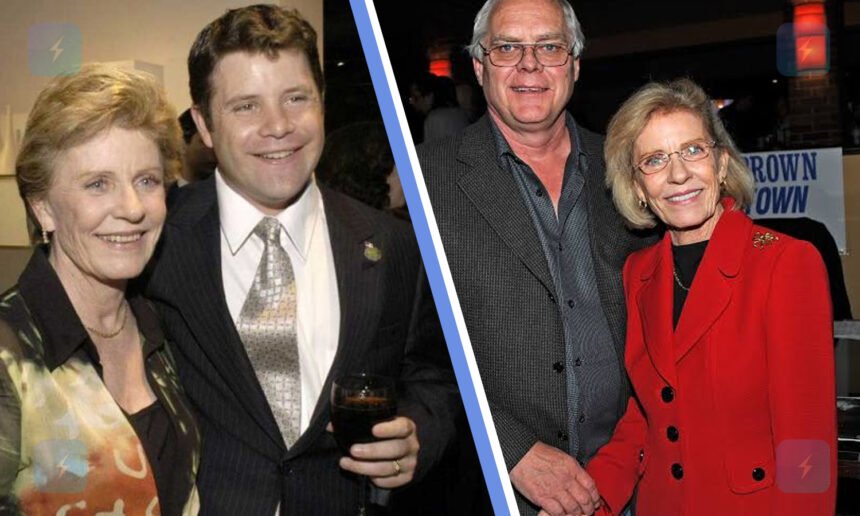
Michael Tell was an American newspaper publisher and former concert promoter whose life connected several very different parts of American culture: the growth of Las Vegas, the rock-and-roll concert business, Jewish community journalism, and, unexpectedly, Hollywood history. To many people searching his name, Michael Tell is best known as the briefly married former husband of actress Patty Duke and the biological father of actor Sean Astin. That description is accurate, but it covers only a small part of his story.
Tell spent decades associated with the Las Vegas Israelite, the Jewish newspaper founded by his parents, Jack and Beatrice Tell. Before returning to the family publication, he worked in concert promotion and recalled organizing performances involving prominent musicians. His career eventually shifted from entertainment promotion to community publishing, where he became a familiar figure in Southern Nevada’s Jewish community.
Michael Tell died on April 6, 2025, at the age of 80. His newspaper’s official memorial gives his life dates as March 1, 1945, to April 6, 2025.
His death makes it especially important to correct older online biographies that still describe him as living or contain uncertain information about his age, career, and family.
Who Was Michael Tell?
Michael Tell was a newspaper editor and publisher, concert promoter, and longtime Las Vegas resident. He was the son of Jack and Beatrice Tell, the couple who established the Las Vegas Israelite in 1965. Michael eventually became the second generation of the Tell family to operate the publication.
According to the Southern Nevada Jewish Community Digital Heritage Project at the University of Nevada, Las Vegas, Tell moved west with his father when he was 16. Jack Tell briefly became involved with the historic Territorial Enterprise in Virginia City before the family ultimately settled in Las Vegas.
Michael’s early professional interests did not remain limited to newspapers. As a young man, he became involved in entertainment promotion, opened a teenage nightclub, and later developed a concert-promotion business.
This background explains why different biographies describe Michael Tell in different ways. He was not simply a publisher or simply a music promoter. Both occupations represented substantial periods of his life.
His connection to Hollywood came primarily through his extremely brief marriage to actress Patty Duke in 1970 and the later determination that he was the biological father of her son, Sean Astin.
Michael Tell’s Early Life and Move to Nevada
The Las Vegas Israelite memorial lists Michael Tell’s birth date as March 1, 1945. He was the youngest son of Jack and Beatrice Tell.
In a 2018 oral-history interview preserved by UNLV Special Collections, Tell discussed his family’s Jewish roots in New York and New Jersey. He recalled having a Jewish upbringing and becoming a bar mitzvah in a Conservative synagogue in New York City.
A major change came when he was 16 and traveled to Nevada with his father. Jack Tell was interested in newspaper ownership and became involved with the Territorial Enterprise in Virginia City. Michael attended Reno High School and gained some early exposure to newspaper work during this period.
The family’s Virginia City newspaper venture did not last. They eventually moved to Las Vegas, where Jack worked in local journalism before establishing his own publication.
Michael, however, was developing another interest: live entertainment.
How Michael Tell Entered the Music Business
Michael Tell’s entertainment career began remarkably early.
In his UNLV oral history, Tell recalled that Las Vegas offered relatively few entertainment options specifically for teenagers in the early 1960s. In 1961, he opened a teenage nightclub called the Twin Lakes Twist at Twin Lakes Lodge.
Tell said he persuaded Bobby Darin to perform even though he could not initially offer him a normal performance fee. He recalled that Wayne Newton appeared the following night. Those early events encouraged him to pursue concert promotion more seriously.
He subsequently promoted concerts in Las Vegas and developed Mike Tell Productions. His work eventually took him to Los Angeles, where he spent years in the concert business.
Tell made several notable claims about this period in his oral history, including that he became one of the country’s largest concert promoters and helped give early opportunities to Jimi Hendrix and José Feliciano. Because some of these details come primarily from Tell’s own recollections, they are best presented as his account rather than independently documented industry rankings.
What is well established is that concert promotion was a genuine and significant part of his professional life before newspaper publishing became his main career.
Why Michael Tell Left Concert Promotion
Tell’s transition away from concert promotion was dramatic.
During his 2018 interview, he described a troubled concert involving Al Green and The Dramatics in Bakersfield, California. Tell said that a dispute surrounding the performance resulted in him being held at gunpoint. He eventually arranged transportation so the required performers could reach the event.
Around the same period, his father died.
In 1979, Tell returned to Las Vegas and became increasingly involved with the Las Vegas Israelite. The combination of his father’s death and his difficult final experiences in concert promotion effectively marked the beginning of a new stage in his career.
Instead of spending the following decades promoting musicians, Tell would become closely identified with a community newspaper.
The Las Vegas Israelite and the Tell Family
Jack and Beatrice Tell founded the Las Vegas Israelite in 1965. Jack served as its founder, editor, and publisher, while Beatrice was deeply involved in the family newspaper business.
Michael later said that he had helped choose the publication’s name. He recalled being influenced by The Carolina Israelite and believed that “Israelite” would work as part of the name of the new Las Vegas publication.
When Jack Tell died in 1979, Michael returned to help his mother. Historical copies of the newspaper confirm that Michael was serving as editor and publisher by the 1980s, with Beatrice Tell listed as business manager.
UNLV describes Michael as the second generation of ownership. When he returned in 1979, the newspaper had a circulation of approximately 2,000, according to his oral-history account.
Over time, the publication expanded its reach and adapted to a rapidly growing Las Vegas community.
Michael Tell’s Approach to Community Journalism
One of the more important parts of Michael Tell’s career was his decision to emphasize local Jewish news.
National and international Jewish stories were increasingly available through larger newspapers, television, and other media. A community newspaper could offer something those outlets could not: detailed reporting about local synagogues, celebrations, religious events, community leaders, families, and organizations.
Tell explained in his oral history that the Israelite increasingly shifted its attention toward local coverage as Las Vegas grew.
That approach gave the newspaper a clearly defined purpose.
By 2009, the Las Vegas Sun described the Las Vegas Israelite as the remaining newspaper specifically targeting Southern Nevada’s Jewish community after another local Jewish publication closed. The report cited a paid circulation of 10,000 plus substantial free distribution at that time.
Tell’s newspaper was not intended to compete directly with major national news organizations. Its value came from documenting a community that larger publications could cover only occasionally.
Michael Tell and the Growth of Jewish Las Vegas
Michael Tell witnessed enormous changes in Las Vegas during his lifetime.
When his family arrived in Nevada, Las Vegas was far smaller than the metropolitan area it later became. Tell watched both the city’s overall population and its Jewish community expand significantly.
His newspaper consequently became a historical record of that growth.
A particularly interesting episode involved the development of the Chabad presence in Las Vegas. Tell recalled that in 1992 he published an advertisement for High Holy Day services at the Aladdin hotel and used the term “Lubavitcher.” According to Tell’s account, the advertisement eventually attracted attention within the Lubavitch movement and was connected to Rabbi Shea Harlig coming to Las Vegas.
The story is valuable partly because it demonstrates the influence a small community newspaper could have before websites and social media became the dominant ways to distribute local information.
Tell also documented and spoke about antisemitism in Las Vegas. His oral history discusses incidents involving neo-Nazis and public controversy, showing that the newspaper’s role extended beyond community announcements and celebrations.
Michael Tell and Patty Duke
Michael Tell’s connection to actress Patty Duke is the part of his personal life that has generated the greatest public curiosity.
Duke was already a highly successful actress by 1970. She had achieved fame through The Miracle Worker, The Patty Duke Show, and other film and television work.
In June 1970, Duke and Tell married. Their marriage lasted only 13 days and was annulled in July. Sources vary slightly on the exact June wedding date, with June 24 and June 26 appearing in biographical accounts, so the safest established description is that they married in late June 1970 and the marriage was annulled in early July.
The relationship was therefore extraordinarily brief.
It nevertheless remained part of both their biographies because Duke was pregnant around this period, leading to a complicated question about the identity of her child’s biological father.
Was Michael Tell Sean Astin’s Biological Father?
Yes. Michael Tell was identified as actor Sean Astin’s biological father after genetic testing.
Sean Astin was born on February 25, 1971. For years, there was uncertainty surrounding his biological paternity. John Astin, whom Patty Duke later married, became Sean’s adoptive father and played a major parental role in his life.
When Sean was older, he sought a more definite answer about his biological ancestry. DNA testing ultimately identified Michael Tell as his biological father. Modern biographical reporting, including People, recognizes Tell as Sean Astin’s biological father.
The distinction between biological and parental relationships is important here. John Astin raised and adopted Sean, while Michael Tell was his biological father.
Sean has spoken positively about the different father figures in his life rather than presenting the story as a simple replacement of one father by another.
Michael also described having a good relationship with Sean. In reporting published after Tell’s death, he was quoted describing Sean as his only son and Sean’s three daughters as his grandchildren.
Life Beyond the Patty Duke Story
The intense public interest in Patty Duke and Sean Astin can distort Michael Tell’s biography.
His marriage to Duke occupied less than two weeks of a life that lasted 80 years. His involvement in Nevada journalism, concert promotion, and Jewish community life stretched across decades.
Tell eventually married again. At the time of his death, the Las Vegas Review-Journal listed his wife, Nelcy Tell, among his survivors. It also identified Sean Astin, three grandchildren, his brother Jay Tell, and several nieces among his surviving family members.
Reliable public information about Tell’s later private marriage is limited, and there is little justification for constructing a detailed relationship history from unsourced celebrity-biography websites.
The available evidence supports a simpler conclusion: Tell had a substantial personal and professional life after the Patty Duke marriage, much of it centered on Las Vegas rather than Hollywood.
Michael Tell’s Later Years
In his later decades, Tell remained strongly associated with the Las Vegas Israelite.
His 2018 UNLV interview offers an unusually valuable firsthand account of his experiences. Rather than focusing primarily on Hollywood, the interview concentrates on Jewish life, Las Vegas history, newspaper publishing, entertainment promotion, and the changes Tell had witnessed in the city.
He also discussed succession.
Tell said that his nieces would eventually carry the publication forward. That prediction proved meaningful after his death.
The newspaper’s current website describes the publication as a Tell family legacy begun by Jack and Beatrice, continued for approximately 40 years by Michael, and now carried forward by Bonnie Tell Lally and Michele Tell.
This continuity may ultimately be one of the most lasting aspects of Michael Tell’s career.
Michael Tell’s Death in 2025
Michael Tell died on April 6, 2025.
The official Las Vegas Israelite memorial lists his dates as March 1, 1945–April 6, 2025. The newspaper temporarily paused publication following his death while announcing plans to reorganize and continue under the next generation of the Tell family.
The Las Vegas Review-Journal reported that Tell was 80 and remembered him both as a former concert promoter and as the longtime publisher who helped preserve a newspaper serving Las Vegas’s Jewish community. Las Vegas Mayor Shelley Berkley credited him with keeping the publication alive for decades so that the community continued to have access to locally relevant news.
The distinction between his death date and the date news reports appeared online is worth noting. April 6, 2025, is the date supported by the newspaper’s own memorial.
What Happened to the Las Vegas Israelite After Michael Tell’s Death?
Michael Tell’s death did not end the newspaper.
The Las Vegas Israelite announced a temporary hiatus and said it would be retooled with new columnists, features, and community information. It also stated that the publication would continue in print and online.
Its current website describes Bonnie Tell Lally and Michele Tell as continuing the Tell family legacy.
This succession is significant because the newspaper had been closely connected to one family since its establishment in 1965.
Jack and Beatrice created it, Michael sustained it for decades, and another generation is now responsible for carrying it forward.
Verified Facts and Details That Remain Uncertain
Michael Tell’s biography demonstrates why celebrity-focused internet research requires caution.
Several important facts are supported by strong sources. His newspaper’s memorial confirms his birth and death dates. UNLV’s oral-history archive documents his family background, move to Nevada, concert-promotion career, and newspaper work. Historical newspaper records confirm his role as editor and publisher, while established reporting supports his relationship with Sean Astin.
Other frequently repeated claims are less secure.
For example, no reliable public financial documentation establishes Michael Tell’s exact net worth. Websites assigning him a precise fortune should therefore not be treated as authoritative.
Similarly, detailed claims about every artist Tell supposedly discovered, his exact industry ranking as a promoter, or private details of his later relationships should be distinguished from independently documented facts. Some entertainment-career details originate from Tell’s own recollections, which are valuable primary evidence but not the same as independent verification.
There is also no meaningful reason to discuss subjects such as AI, automation, software integrations, cybersecurity, or technology “features” in a Michael Tell biography. Those categories may make sense for a company or digital product, but forcing them into an article about a newspaper publisher would create irrelevant or potentially fabricated material.
Michael Tell’s Legacy
Michael Tell’s legacy exists in several different worlds.
In entertainment history, he was part of the concert-promotion business during a period when rock music and live events were expanding rapidly. His own recollections place him around numerous prominent performers and describe an entrepreneurial career that began while he was still remarkably young.
In popular culture, he will remain connected to Patty Duke and Sean Astin. The 13-day marriage is unusual enough to attract continuing attention, while the later confirmation that Tell was Sean’s biological father made the relationship more historically significant.
Yet his strongest long-term professional legacy may be local journalism.
Tell returned to a relatively small family newspaper in 1979 and remained associated with it for decades. During that period, Las Vegas changed dramatically, and the Jewish community grew with it. The Las Vegas Israelite documented community organizations, religious life, celebrations, controversies, personalities, and everyday events that could easily have disappeared from the historical record.
That work is less glamorous than a Hollywood connection, but it occupied far more of his life.
Bottom Line
Michael Tell was far more than Patty Duke’s 13-day husband or Sean Astin’s biological father. Born on March 1, 1945, he became involved in Nevada newspapers as a teenager, entered concert promotion, developed an entertainment business, and eventually returned to Las Vegas to continue the newspaper established by his parents.
From 1979 onward, the Las Vegas Israelite became the defining professional chapter of his life. He helped maintain a publication dedicated to Southern Nevada’s Jewish community while watching Las Vegas transform from the smaller city of his youth into a major metropolitan area.
His brief marriage to Patty Duke remains the most searchable episode of his personal life, but it should not overshadow decades of work in entertainment, journalism, and community publishing.
Michael Tell died on April 6, 2025, at age 80. The strongest evidence of his professional legacy is that the newspaper his family established did not disappear with him. Instead, the next generation of the Tell family announced its intention to continue the Las Vegas Israelite, extending a publishing tradition that began in 1965.
Frequently Asked Questions
Who was Michael Tell?
Michael Tell was an American concert promoter and longtime newspaper editor and publisher. He became the second generation of his family to manage the Las Vegas Israelite, a newspaper serving Southern Nevada’s Jewish community. He was also known as Patty Duke’s briefly married former husband and Sean Astin’s biological father.
When was Michael Tell born?
The official memorial published by the Las Vegas Israelite lists Michael Tell’s birth date as March 1, 1945.
Was Michael Tell really Sean Astin’s biological father?
Yes. DNA testing identified Michael Tell as Sean Astin’s biological father. John Astin, whom Patty Duke later married, adopted and helped raise Sean, so Sean’s family history includes both biological and adoptive paternal relationships.
How long were Michael Tell and Patty Duke married?
Michael Tell and Patty Duke were married for approximately 13 days in 1970 before their marriage was annulled. Sources differ slightly on the exact June wedding date, but the extremely short duration of the marriage is well documented.
What did Michael Tell do for a living?
Tell worked first in entertainment and concert promotion and later became best known professionally as the editor and publisher of the Las Vegas Israelite. He returned to the family newspaper in 1979 after the death of his father and remained associated with it for decades.
When did Michael Tell die?
Michael Tell died on April 6, 2025, at the age of 80. His newspaper published a memorial listing his lifespan as March 1, 1945–April 6, 2025.
What happened to the Las Vegas Israelite after Michael Tell died?
The newspaper temporarily paused publication following Tell’s death but announced that it would continue under the next generation of the family. Its current website identifies Bonnie Tell Lally and Michele Tell as carrying forward the Tell family publishing legacy.
Meet Svetlana Erokhin: Biography, Marriage to Richard Dreyfuss, Family, and Private Life
Fentomagazine.com USA: Complete Guide to Fento Magazine, Content, Features, Privacy, and Uses