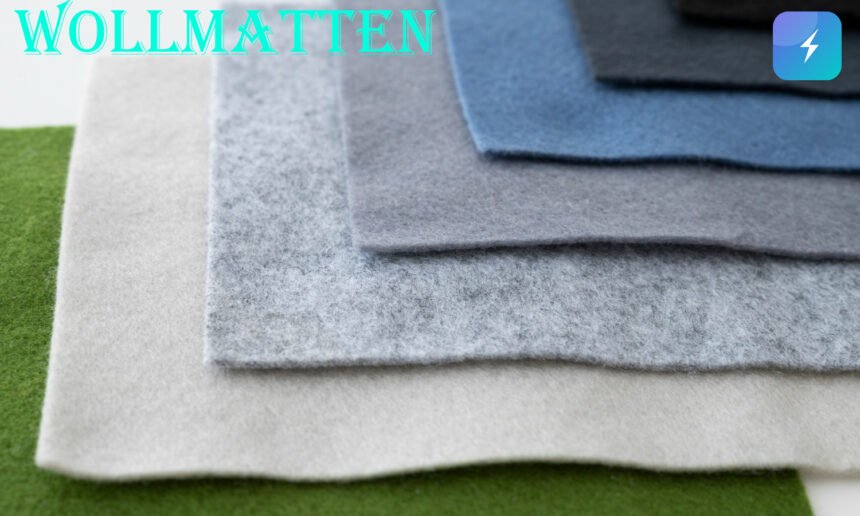
Wollmatten are wool-based mats used for a surprisingly wide range of purposes, from making hard floors warmer and more comfortable to insulating buildings, protecting surfaces, supporting gardening projects, and providing dense felt material for practical applications. The German term is broad rather than product-specific, so two items described as Wollmatten may differ significantly in construction, thickness, appearance, composition, and intended use.
That distinction is important for anyone researching or buying a wool mat. Wool has useful natural characteristics, including resilience, thermal insulation, moisture-vapor management, and the ability to form strong felted structures. However, those characteristics do not mean every wool mat performs identically. A decorative floor mat is not automatically suitable as building insulation, while a garden-grade sheep-wool mat may be designed to decompose rather than remain intact for years.
This guide explains what Wollmatten are, how they are made, their major types and applications, their advantages and limitations, sustainability considerations, maintenance requirements, and the practical details worth checking before choosing one.
What Are Wollmatten?
“Wollmatten” is the plural form of the German term “Wollmatte.” In simple English, it means “wool mats.” It is a descriptive term rather than the name of a particular company, technology, or standardized product.
Most Wollmatten are made completely or partly from sheep’s wool. Depending on their purpose, the fibers may be felted, needle-punched, woven, tufted, compressed, or combined with a separate backing. Some products are thick and soft, while others are thin, dense, and relatively firm.
Composition also varies. A product described as a wool mat does not necessarily consist entirely of untreated wool. Depending on the manufacturer and application, it can contain synthetic fibers, adhesives, dyes, latex, backing materials, coatings, or other components.
For this reason, the product specification matters more than the general Wollmatten name. Buyers looking for a particular characteristic—such as biodegradability, pure wool content, suitability for construction, or compatibility with underfloor heating—should verify that characteristic for the individual product.
Why Wool Works Well as a Mat Material
The usefulness of Wollmatten starts with the structure of wool fibers. Wool is naturally crimped rather than completely straight. When many fibers are brought together, their structure creates small spaces that hold air. Trapped air contributes to wool’s insulating properties and helps explain why wool is widely associated with warmth.
Wool is also resilient. Its fibers can bend and compress and then recover much of their shape. In appropriately constructed floor coverings, this resilience helps the surface tolerate everyday pressure from walking and furniture.
Another important property is moisture interaction. Wool can absorb moisture vapor from the surrounding air and release it as conditions change. This should not be confused with waterproofing. A wool mat can still become wet, and persistent dampness can create maintenance problems.
The fibrous structure of wool can also contribute to acoustic absorption. Purpose-designed wool products may therefore be used as part of acoustic treatments or building systems. Their actual performance depends on factors such as thickness, density, installation method, and the complete construction of the room or building.
Main Types of Wollmatten
Because Wollmatten is a general term, understanding the main categories makes selecting the correct product much easier.
Decorative Floor Mats
Interior wool mats are among the most familiar forms. They may be positioned beside a bed, underneath a small table, in a reading area, or over hard flooring such as wood, stone, tile, or laminate.
Their main functions are comfort, decoration, surface protection, and warmth underfoot. Colors, pile heights, patterns, dimensions, and manufacturing methods vary substantially.
Floor products may also have backing or anti-slip materials. Buyers should check both the visible wool surface and the backing when material composition is important.
Felted Wool Mats
Felting transforms wool fibers into a compact structure. The resulting material can range from relatively soft sheets to dense industrial-style felt.
Felted Wollmatten may be used for furniture protection, crafts, work surfaces, padding, storage, equipment protection, or interior design projects.
Density and thickness are particularly important here. Two pieces of wool felt that appear similar in photographs can behave very differently when placed under weight or used as cushioning.
Wool Insulation Mats
Sheep’s wool can be manufactured into dedicated building-insulation products for roofs, walls, ceilings, and other parts of a building envelope.
These products rely partly on air trapped within their fibrous structure to reduce heat transfer. Fibrous insulation can also contribute to acoustic control.
Construction applications require considerably more care than buying a decorative mat. Products should be specifically designed and documented for the intended building application. Relevant technical specifications, installation requirements, fire performance, local building regulations, moisture conditions, and other safety considerations should be checked before installation.
A decorative Wollmatte should never be assumed to be a substitute for certified building insulation.
Garden and Mulching Wollmatten
Specialized sheep-wool mats are also manufactured for gardening. A garden mat is typically placed over prepared soil and around plants.
Certain commercial products are designed to block sunlight from reaching the soil, helping suppress unwanted plant growth while allowing water and air to pass through. Wool can also retain moisture, which may help reduce rapid drying of the soil.
Some pure sheep-wool garden mats are intentionally biodegradable. As the material breaks down, it becomes part of the garden environment rather than remaining as a permanent synthetic sheet.
The characteristics are product-specific, however. Gardeners should confirm that a particular mat is intended for soil contact and check whether it contains synthetic binders, backing, coatings, or other non-biodegradable materials.
How Wollmatten Are Made
There is no single manufacturing process used for every Wollmatte. Production depends heavily on its intended application.
Felting is particularly suitable for wool because the microscopic structure of the fibers allows them to interlock when processed appropriately. This creates a coherent textile without requiring a traditional woven structure.
Needle punching is another method used for nonwoven materials. Barbed needles mechanically entangle fibers, gradually turning loose material into a denser mat. Needle-punched structures can be useful for technical and gardening applications.
Decorative products may instead use weaving or tufting. Woven wool textiles are created by interlacing yarns according to a defined structure, while tufting inserts yarn into a backing.
After the basic structure is produced, manufacturers may add backing, edge finishing, dyes, treatments, adhesives, or other components depending on the intended application.
These differences explain why consumers should avoid treating “natural wool mat” as a complete technical specification.
Wollmatten for Homes and Interior Spaces
One of the strongest reasons to use wool mats indoors is comfort. A hard floor can be practical and attractive but may feel cold or uncomfortable, particularly in bedrooms, home offices, and relaxation areas. A properly chosen Wollmatte introduces a softer layer between the user and the floor.
Wool also adds visual texture. Natural wool surfaces can work with minimalist, Scandinavian-inspired, rustic, traditional, and contemporary interiors depending on their design. Neutral wool colors can create a restrained appearance, while dyed products allow greater decorative flexibility.
Floor protection is another possible advantage. A suitable mat can create separation between furniture or regular foot traffic and the underlying floor. However, users should make sure that the backing itself will not mark or react with delicate flooring.
Slip resistance deserves attention as well. A lightweight wool mat on a smooth floor may move underfoot. If the product does not have a suitable non-slip backing, an appropriate rug pad may be needed.
Wollmatten in Gardening
Garden Wollmatten are significantly different from decorative household products. Their purpose is functional rather than primarily visual.
A purpose-made sheep-wool weed mat can cover exposed soil and reduce the amount of light available to emerging weeds. For example, Windhager describes its 100% sheep-wool weed mat as densely needle-punched, water- and air-permeable, and designed to suppress weed growth while helping protect soil from drying.
Installation normally starts with preparing the bed and removing existing weeds. The mat is then laid across the soil and cut where necessary to accommodate established plants. Depending on the product and location, the edges may need to be secured.
Biodegradability can be a major attraction, but it should not be generalized to every Wollmatte. Windhager specifically identifies one of its pure sheep-wool garden products as fully biodegradable, while another commercial sheep-wool mat is marketed as breaking down while contributing nutrients to the soil.
This illustrates why the exact product specification is essential. A decorative wool rug containing synthetic backing should obviously not be treated as a biodegradable garden mat.
Thermal and Acoustic Uses
Wool’s fiber structure makes it relevant to both thermal and acoustic applications.
In thermal applications, numerous small air spaces within a fibrous material help slow heat transfer. A wool floor mat can therefore make a surface feel more comfortable, while purpose-designed sheep-wool insulation can become part of a larger building insulation system.
Acoustic performance works somewhat differently. Soft, porous materials can absorb portions of sound energy instead of reflecting everything back into a room. Consequently, adding suitable textile surfaces may reduce the harsh feeling associated with spaces dominated by hard floors, walls, glass, and ceilings.
This does not mean an ordinary Wollmatte will soundproof a room. Sound absorption and sound isolation are different concepts. Effective sound isolation usually requires a carefully designed construction involving mass, separation, sealing, and other elements.
Anyone buying wool for measurable thermal or acoustic performance should therefore look for documented technical data instead of relying on general statements about wool.
Benefits of Wollmatten
The benefits of a Wollmatte depend on its design, but several characteristics explain the continuing interest in wool-based products.
Wool provides natural warmth and cushioning, making it particularly appealing for interior floor surfaces. Its resilience can support long-term use when the mat is well constructed and appropriately maintained.
It is also a renewable fiber because sheep continually regrow fleece after shearing. That renewable origin can make wool attractive to consumers trying to reduce their dependence on entirely fossil-derived textile materials.
Certain pure and untreated wool products can eventually biodegrade under appropriate conditions. Garden mats demonstrate one practical application of this characteristic.
Wool’s interaction with moisture vapor and its insulating structure provide additional functional benefits. Depending on product construction, it can be useful for thermal comfort, sound absorption, padding, and surface protection.
However, sustainability cannot be determined from fiber type alone. Farming practices, manufacturing, transportation, dyes, chemical treatments, backing materials, durability, maintenance, and end-of-life options all contribute to the environmental footprint of a finished Wollmatte.
Limitations and Potential Drawbacks
Wollmatten are not automatically the best choice for every application.
First, wool requires appropriate care. Some wool products can shrink, distort, felt further, or change texture when exposed to unsuitable washing methods, excessive agitation, high temperatures, or prolonged moisture.
Staining can also be an issue with floor mats. Liquids should generally be addressed promptly according to the manufacturer’s care instructions rather than aggressively scrubbing the fibers.
Another consideration is cost. Wool products can require more expensive raw materials and manufacturing than basic synthetic alternatives, although actual prices vary too widely by size, quality, origin, construction, and brand to make a useful universal comparison.
Natural fibers can also vary slightly in texture and appearance. For buyers expecting perfectly uniform industrial surfaces, that variation may be undesirable; for others, it is part of wool’s appeal.
Finally, not every product marketed with natural-language terminology is completely natural. Synthetic backing, blended fibers, adhesives, dyes, and surface treatments may alter recyclability, biodegradability, cleaning requirements, and overall environmental performance.
How to Choose the Right Wollmatte
Start with the intended purpose rather than appearance. A mat for a bedroom has very different requirements from a weed-control mat or construction insulation product.
For indoor flooring, examine dimensions, pile or felt thickness, backing, slip resistance, cleaning instructions, wool percentage, and compatibility with the floor underneath.
For gardening, look for explicit confirmation that the product is intended for soil contact. Check composition, biodegradability, water permeability, dimensions, installation instructions, and expected behavior as the material decomposes.
For insulation or acoustic applications, technical documentation is more important than general marketing descriptions. Look for performance specifications and confirm that the product is approved or suitable for its intended application under applicable local requirements.
A useful buying checklist includes:
- Intended application
- Wool percentage and complete material composition
- Thickness and density
- Dimensions or area coverage
- Backing and binders
- Care requirements
- Installation instructions
- Relevant technical certifications or test data
- Biodegradability claims, where important
- Manufacturer guidance and warranty
The more specialized the application, the more important documented specifications become.
Cleaning and Caring for Wollmatten
Care depends heavily on construction, so manufacturer instructions should always take priority over generic cleaning advice.
For indoor wool mats, regular removal of loose dirt can prevent particles from becoming deeply embedded in the fibers. Vacuuming may be appropriate for many products, but settings and attachments should match the construction of the mat.
Spills should normally be addressed promptly. Blotting is often preferable to vigorous rubbing because aggressive friction can spread a stain or disturb the wool surface.
Before applying any cleaning chemical, confirm that it is suitable for wool and test according to the manufacturer’s instructions. Strong or inappropriate products can affect dyes, fibers, backing, or surface texture.
Deep cleaning is particularly product-dependent. Some small wool items may have specific washing instructions, while large rugs or specialized felt products may require professional treatment.
Garden Wollmatten are different. Biodegradable versions are generally intended to weather and eventually break down, so preserving them indefinitely would defeat part of their purpose.
Sustainability and Environmental Considerations
The environmental appeal of Wollmatten usually begins with wool being a renewable natural fiber. In certain applications, wool can also offer a useful alternative to products made primarily from synthetic polymers.
Yet “natural” and “sustainable” should not be treated as identical terms.
The environmental impact of wool involves animal husbandry, land use, processing, washing, transportation, manufacturing, dyeing, product lifespan, and eventual disposal. A long-lasting wool floor mat used for many years has a different life-cycle profile from a disposable or short-lived product.
Product construction matters too. Pure wool may have a relatively straightforward end-of-life pathway in some circumstances, whereas wool permanently attached to synthetic backing or combined with adhesives can be more complicated.
For sustainability-focused buyers, useful questions include where the wool came from, what other materials are present, whether components can be separated, how long the product is expected to last, and what can realistically happen to it at the end of its useful life.
Do Wollmatten Use AI, Automation, or Smart Technology?
There is no inherent artificial intelligence component in a Wollmatte. The term describes a material-based product category rather than a digital technology.
Manufacturers may use modern automation in textile production, quality control, cutting, logistics, or manufacturing processes, but those systems belong to the production environment rather than the mat itself.
Likewise, there are no standard software integrations, user accounts, cloud services, data collection systems, or privacy requirements associated with an ordinary Wollmatte.
This distinction matters because technology-focused article templates sometimes force irrelevant sections about AI, cybersecurity, apps, or integrations onto physical products. For Wollmatten, material composition, manufacturing quality, intended application, performance, installation, and maintenance are far more relevant.
Safety, Quality, and Information That Should Be Verified
Wollmatten is too broad a term for universal safety or performance claims.
For ordinary decorative use, consumers should consider slip resistance, care instructions, backing compatibility, and intended placement. Homes with small children or pets may have additional practical requirements concerning loose edges, cleaning, and durability.
Building applications require a different standard of verification. Fire behavior, thermal properties, moisture management, installation details, and compliance requirements should come from technical documentation for the specific insulation product.
Garden users should verify composition before allowing a product to decompose into soil. Claims such as “100% wool,” “biodegradable,” or “chemical-free” should be tied to the actual product being purchased rather than assumed from the Wollmatten name.
When specifications cannot be verified, they should remain unknown rather than being filled in with assumptions.
Future Possibilities for Wool Mats
Wollmatten sit at an interesting intersection of traditional materials and contemporary product design. Wool is an old textile fiber, but modern manufacturing can shape it into products for interiors, gardening, acoustic treatment, insulation, protective surfaces, and other specialized uses.
Future development may focus on improving manufacturing efficiency, material traceability, recyclability, circular design, and the use of lower-value wool streams that might otherwise have limited commercial applications.
Gardening is another interesting area because biodegradable natural-fiber products can potentially replace certain short-lived plastic materials when performance requirements permit.
However, future claims should be treated as possibilities rather than established outcomes. The strongest case for Wollmatten today remains much simpler: wool is a versatile natural fiber whose physical properties can be adapted to a variety of useful mat-based products.
Bottom Line
Wollmatten simply means wool mats, but the term covers a much broader category than it initially suggests. A Wollmatte can be a comfortable floor covering, dense felt pad, specialized insulation material, acoustic component, craft surface, or biodegradable garden product.
The main advantages come from wool itself: resilience, cushioning, insulating structure, moisture-vapor interaction, and renewable natural-fiber origin. Certain pure wool products can also biodegrade, making them particularly interesting for applications such as garden mulch mats.
The key is not to assume that every Wollmatte shares every benefit. Construction, density, backing, treatments, wool content, and intended use determine how a particular product performs. Decorative mats should be evaluated as interior textiles, garden mats as horticultural products, and insulation mats according to appropriate technical standards.
For most buyers, the best approach is straightforward: define what the mat needs to do, examine the complete material specification, follow the manufacturer’s care or installation instructions, and verify any specialized performance or environmental claims before purchasing.
Frequently Asked Questions
What does Wollmatten mean?
Wollmatten is a German word meaning “wool mats.” It is a general term rather than the name of a particular brand or standardized product, so it can refer to several different kinds of wool-based mats.
Are all Wollmatten made from 100% wool?
No. Some products are made entirely from wool, while others contain synthetic fibers, backing, adhesives, dyes, latex, coatings, or other materials. Check the complete product specification when purity is important.
Can Wollmatten be used in the garden?
Purpose-made garden Wollmatten can. Specialized sheep-wool mats are available for covering soil, suppressing weeds, retaining moisture, and protecting garden beds. Use a product specifically intended for gardening rather than an ordinary indoor wool mat.
Are Wollmatten biodegradable?
Some pure sheep-wool garden mats are specifically manufactured and marketed as biodegradable. However, this cannot be assumed for every wool mat because backing, adhesives, synthetic fibers, and treatments can change the product’s end-of-life characteristics.
Can wool mats be used for insulation?
Purpose-designed sheep-wool insulation products can be used in building applications. Decorative floor mats should not be substituted for construction insulation. Always check technical specifications and applicable building requirements.
How should a Wollmatte be cleaned?
Cleaning depends on the product’s construction. Regular removal of loose dirt and prompt attention to spills can help maintain indoor mats, but the manufacturer’s instructions should determine whether washing, spot cleaning, or professional cleaning is appropriate.
Are Wollmatten environmentally friendly?
Wool is renewable, and some pure-wool products can biodegrade, but environmental performance depends on the complete product life cycle. Wool sourcing, processing, dyes, backing materials, transportation, durability, maintenance, and disposal should all be considered when evaluating sustainability.