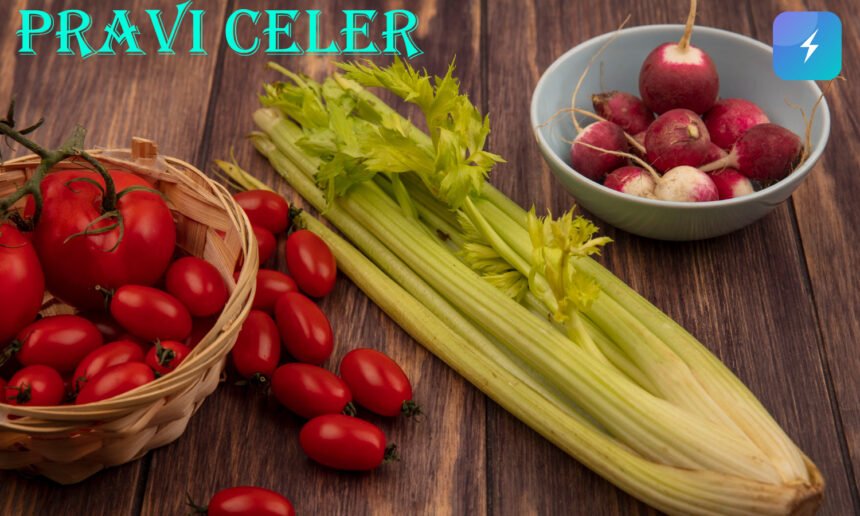
The term Pravi Celer has appeared increasingly in online searches, food articles, gardening discussions, and lifestyle content. At first glance, it sounds like the name of an unusual vegetable, a special celery variety, or even a newly discovered health food. The available evidence points to a much simpler explanation: in food-related contexts, Pravi Celer is associated with celery, particularly the plant scientifically known as Apium graveolens.
This distinction matters because several online pages describe Pravi Celer in ways that can make an ordinary vegetable sound like a separate botanical discovery. Reliable botanical references do not recognize “Pravi Celer” as the scientific name of a unique plant species or newly identified cultivar. Kew Science recognizes Apium graveolens as an accepted species in the Apiaceae family—the same family that includes carrots, parsley, and related plants.
At the same time, the phrase has another modern use online. A website operating under the Pravi Celer name describes itself as a luxury lifestyle and editorial brand. Therefore, anyone researching this keyword needs to consider context. This guide focuses primarily on the food and plant meaning while clearly explaining the newer brand-related use where relevant.
What Is Pravi Celer?
In food, gardening, and nutrition discussions, Pravi Celer generally refers to celery. Several contemporary sources interpret the phrase as “true celery” or “real celery,” connecting “celer” with celery and “pravi” with the idea of something genuine or real. It should not automatically be treated as the formal name of a special vegetable variety.
The plant behind most of these references is Apium graveolens. Kew Science lists this as an accepted species belonging to the genus Apium and family Apiaceae. It is a biennial plant associated primarily with temperate environments and has a long history of cultivation and food use.
One reason the term can become confusing is that celery does not always look the same. Different cultivated forms may be grown primarily for their stalks, leaves, or enlarged root-like base. Consequently, one person using “Pravi Celer” may be thinking about familiar green celery stalks, while another may be discussing celeriac or traditional whole-plant culinary use.
The safest interpretation is therefore contextual: Pravi Celer is generally connected with celery rather than a scientifically established new vegetable called “Pravi Celer.”
Is Pravi Celer a Separate Species of Celery?
There is currently no strong botanical evidence that Pravi Celer is the accepted scientific name of a separate celery species. Authoritative plant taxonomy instead recognizes Apium graveolens L. as the accepted species associated with common celery. Kew records the species as having been formally published by Carl Linnaeus in 1753.
This is important because internet terminology can spread much faster than scientific classification. Once an unfamiliar regional expression becomes popular online, different websites may reinterpret it as a product name, special cultivar, traditional superfood, or unique plant. Repetition does not establish a new botanical classification.
There are genuine differences among cultivated celery forms. Some have been selected for large, crisp leaf stalks, while others are valued for leaves or an enlarged underground portion commonly sold as celeriac. These differences are meaningful for cooking and gardening, but they do not by themselves prove that “Pravi Celer” represents a separate botanical species.
For readers encountering claims about a rare Pravi Celer variety, it is sensible to look for a botanical name, recognized cultivar name, seed supplier information, or horticultural documentation before treating the claim as established fact.
Botanical Background of the Celery Behind Pravi Celer
Apium graveolens belongs to the Apiaceae family and the genus Apium. Kew describes it as a biennial species growing mainly in temperate environments. Its documented native range extends broadly from Macaronesia and North Africa through Europe toward western parts of Asia and the Himalaya.
Botanically, celery is more interesting than the trimmed stalks found in supermarkets suggest. Descriptions compiled by Kew include an erect herb with the characteristic celery smell, grooved stems, small greenish-white flowers arranged in umbels, and small fruits. The species is associated naturally with damp environments and has also been widely cultivated.
Celery’s family relationship explains some of its familiar characteristics. Apiaceae contains many aromatic plants used as foods, herbs, and spices. The recognizable smell and flavor of celery make it particularly valuable as an aromatic ingredient rather than merely a crunchy vegetable.
This botanical background also helps separate documented information from online marketing language. Terms such as “ancient super-celery,” “newly discovered variety,” or claims of extraordinary properties require evidence. The established plant itself is already useful and versatile without exaggeration.
Stalk Celery, Leaf Celery, and Celeriac
One of the easiest ways to understand Pravi Celer is to recognize that celery can be cultivated for different edible portions. The familiar supermarket form has thick, crisp leaf stalks and is commonly eaten raw or cooked. Its crunchy texture works particularly well in salads, snacks, soups, stocks, and savory dishes.
Leaf celery places greater culinary emphasis on the aromatic leaves and thinner stems. Its stronger flavor can make relatively small quantities useful in soups, sauces, broths, and seasoning mixtures. Depending on local food traditions, the leaves may be valued just as much as the stalks.
Celeriac is another cultivated form associated with Apium graveolens. Instead of being selected mainly for long stalks, it develops a large, rough, swollen base that is harvested as a root vegetable. Celeriac can be roasted, mashed, boiled, grated into salads, or incorporated into soups.
These differences help explain why descriptions of Pravi Celer sometimes appear inconsistent. Two writers may be talking about closely related cultivated forms of celery while emphasizing completely different parts of the plant.
Traditional and Everyday Culinary Uses
Celery has a practical role in everyday cooking because its flavor works particularly well as a foundation for savory dishes. Chopped stalks can be cooked alongside onions, carrots, herbs, and other vegetables to create aromatic bases for soups, stews, sauces, and stocks.
Raw celery provides a completely different experience. Fresh stalks have a crisp texture and can be sliced into salads, served with dips, added to sandwiches, or eaten as a snack. The leaves can also be useful rather than being automatically discarded. Their stronger celery aroma makes them suitable as a garnish or flavoring ingredient.
Celeriac expands the culinary possibilities further. Once its rough exterior is removed, the interior can be grated, roasted, boiled, puréed, or mashed. Its flavor is recognizably related to celery but its texture makes it suitable for dishes in which ordinary celery stalks would not work as well.
The broader lesson behind the Pravi Celer idea is therefore practical: celery is more than one type of crunchy stalk. Depending on the cultivated form available, different portions of the plant can serve different purposes in the kitchen.
Nutrition and Potential Health Benefits
Celery is often associated with healthy eating, but it is important to describe its nutritional role without turning ordinary food into medicine. Celery contributes water, fiber, vitamins, minerals, and naturally occurring plant compounds to the diet. Its high water content and crisp structure make it an easy vegetable to incorporate into meals and snacks.
Fiber-containing vegetables can contribute to a balanced eating pattern, while the water in fresh produce adds to overall dietary fluid intake. Celery can also be useful for people looking to add volume and texture to meals without relying heavily on calorie-dense ingredients.
However, claims that Pravi Celer can independently “detox” the body, cure chronic diseases, produce dramatic weight loss, or replace medical treatment should be treated cautiously. The established evidence concerns celery as a food; it should not automatically be extended to every health claim made online about “Pravi Celer.”
How celery is consumed matters as well. Eating the whole vegetable preserves its natural structure and fiber in a way that differs from extracting juice. Celery juice may fit into some diets, but it should not be assumed to possess unique medical effects simply because it is concentrated into a drink.
How to Choose, Prepare, and Store Celery
When buying stalk celery, look for stalks that appear firm and crisp rather than soft, heavily wilted, or badly damaged. Leaves, when present, should generally look fresh. Exact appearance varies by cultivar, season, and growing conditions, so cosmetic differences do not necessarily indicate poor quality.
Wash celery carefully before eating it, especially around the base and grooves where soil can remain. Separate stalks when necessary to make cleaning easier. Tough outer strings can be removed if texture is important to the recipe, although this is often optional.
Fresh celery benefits from refrigerated storage that limits moisture loss. Keeping it cool helps maintain its crisp texture. If the celery becomes slightly limp, it may still be usable in cooked dishes even when it is no longer ideal for raw salads.
Celeriac requires different preparation. Its uneven outer surface is usually trimmed or peeled before cooking. Because exposed flesh may discolor, it is often best to prepare it close to cooking time or follow the recipe’s instructions for preventing browning.
Growing Pravi Celer at Home
For gardeners searching specifically for “Pravi Celer seeds,” the first step is to determine what type of celery they actually want. Searching by a recognized celery cultivar or by Apium graveolens is more precise than assuming Pravi Celer is a standardized seed variety.
Celery is associated with moist conditions and can be more demanding than some beginner vegetables. Kew’s botanical descriptions connect Apium graveolens naturally with damp places, streams, ditches, and irrigated environments, which helps explain its preference for reliable moisture.
Successful cultivation generally requires attention to soil moisture, fertility, temperature, spacing, and the needs of the chosen cultivar. Gardeners should use locally appropriate planting guidance because sowing and transplanting schedules vary significantly by climate.
It is equally important to know whether the goal is crisp stalks, flavorful leaves, or celeriac. Buying seeds based on the desired cultivated form prevents the common problem of expecting supermarket-style stalk celery and receiving a plant bred for a different purpose.
Does Pravi Celer Involve AI, Technology, or Automation?
For the vegetable meaning of Pravi Celer, there is no relevant AI system, software platform, automation technology, or digital integration involved. Celery is an agricultural crop, and adding technology sections simply because they appear in articles about software products would create irrelevant information.
Technology can, of course, be used in modern agriculture. Commercial farms may employ irrigation systems, greenhouse controls, weather monitoring, sensors, automated machinery, or supply-chain technology. Those technologies belong to modern agriculture generally and should not be presented as exclusive features of Pravi Celer without evidence.
This distinction is particularly important for search-focused content. A comprehensive article does not need to force every possible technology topic into the subject. Accurate coverage is more useful than artificially expanding a simple vegetable term into a nonexistent technological product.
The separate Pravi Celer lifestyle website is a digital publication, but its existence should not be confused with the botanical meaning of the phrase.
Safety, Allergies, and Sensible Consumption
Although celery is an ordinary food for many people, ordinary foods can still cause allergic reactions. Anyone with a known celery allergy should avoid assuming that products described under another language or regional name are safe simply because the wording looks unfamiliar.
This is particularly important when reading ingredient lists while traveling or purchasing imported foods. Recognizing regional names for familiar allergens can help people make safer choices.
Celery is also used in many prepared foods where it may not be visually obvious. Soups, stocks, seasoning blends, sauces, vegetable mixes, and processed foods may contain celery or celery-derived ingredients.
People managing allergies, medically prescribed diets, medication interactions, or other individual health concerns should rely on qualified medical advice rather than generalized wellness claims found online.
What Is Verified and What Remains Uncertain?
The strongest verified fact is botanical: Apium graveolens is an accepted plant species in the Apiaceae family and is widely associated with the vegetable known as celery. Kew documents its classification, distribution, morphology, and historical food use.
The interpretation of “Pravi Celer” as “true” or “real celery” is widely repeated in recent web content, particularly in discussions connecting the phrase with South Slavic language use. Multiple independent pages use essentially this interpretation.
What is not well established is the idea that Pravi Celer represents a unique botanical species with scientifically demonstrated properties different from ordinary celery. Reliable botanical classification does not provide evidence for such a separate species under that name.
Another source of ambiguity is the current website and brand using the same words. Pravi Celer’s own site describes Pravi Celer as a modern luxury lifestyle brand and editorial publication covering subjects such as travel, cars, yachts, fashion, hotels, dining, watches, technology, and premium experiences.
Context is therefore essential whenever the keyword appears.
Pravi Celer as a Modern Lifestyle Brand
As of September 2026, Pravi Celer is also the name of an online lifestyle publication. Its website presents the brand as being focused on modern luxury and premium experiences rather than celery or nutrition. Its stated subject areas include luxury travel, automobiles, yachts, fashion, designer brands, hotels, fine dining, watches, technology, and related lifestyle topics.
This newer use creates an unusual search-intent split. Someone searching “Pravi Celer meaning” may be trying to identify the food term, while another person searching the exact name may be looking for the lifestyle website.
The two meanings should not be blended. Information about Apium graveolens does not describe the features of the lifestyle publication, and claims made by the lifestyle brand should not be used as evidence about celery.
For publishers and researchers, checking the surrounding context—words such as recipe, vegetable, nutrition, luxury, travel, fashion, or brand—usually makes the intended meaning much clearer.
Common Misconceptions About Pravi Celer
The biggest misconception is that the unusual wording automatically means an unusual plant. Regional and translated food names frequently look exotic when removed from their linguistic context. A familiar ingredient can therefore appear to be something entirely new.
A second misconception is that Pravi Celer must have superior nutritional properties to “normal celery.” There is no solid basis for making that conclusion simply from the name. Nutritional composition can vary with cultivar, growing conditions, plant part, freshness, and preparation method, but a regional expression alone does not establish nutritional superiority.
Another mistake is treating celeriac and stalk celery as completely unrelated vegetables. Their appearance and culinary uses are noticeably different, but both are associated with cultivated forms of Apium graveolens.
Finally, the existence of a modern website called Pravi Celer should not be used as evidence that the vegetable interpretation is incorrect. The same phrase can acquire different meanings in different contexts.
Future Interest in Pravi Celer
Interest in Pravi Celer may continue largely because it sits at the intersection of language, food culture, search trends, and online publishing. Unfamiliar regional terms often attract attention when readers encounter them in recipes, social media posts, gardening content, or search results.
For the vegetable itself, future developments are more likely to concern ordinary agricultural topics such as cultivar development, growing efficiency, disease resistance, sustainability, storage, and consumer preferences than the discovery of a fundamentally new plant called Pravi Celer.
For the online brand, its future direction will depend on how the publication develops. Because the site currently positions itself around luxury lifestyle topics, future coverage may evolve independently of the food-related meaning of its name. Claims about future services, technology, commercial partnerships, or expansion should not be assumed until the publisher confirms them.
This is a useful example of why search terms should be researched rather than interpreted from repeated online claims. A strange-looking keyword can represent a translation, a plant, a brand, or several meanings simultaneously.
Bottom Line
Pravi Celer is best understood according to context. In food and gardening discussions, the term is generally associated with celery and is commonly interpreted as “real” or “true celery.” The established botanical plant behind these discussions is Apium graveolens, an accepted species in the Apiaceae family. It can appear in cultivated forms valued for stalks, leaves, or the enlarged base commonly known as celeriac.
There is no reliable botanical basis for presenting Pravi Celer as a newly discovered species, miracle vegetable, or scientifically proven superfood with unique powers. Celery already has plenty of legitimate value: it is versatile, aromatic, useful in raw and cooked dishes, and compatible with many balanced eating patterns.
At the same time, Pravi Celer is now also used as the name of a luxury lifestyle publication. That modern brand describes itself around premium travel, fashion, automobiles, hospitality, dining, technology, and related experiences.
For readers, the simplest approach is to check the context. If the discussion concerns recipes, plants, nutrition, or gardening, Pravi Celer probably refers to celery. If it concerns luxury travel, fashion, hotels, cars, or lifestyle content, it may refer to the digital publication.
Frequently Asked Questions
What does Pravi Celer mean?
In food-related online content, Pravi Celer is commonly interpreted as “true celery” or “real celery.” It generally refers to celery rather than a scientifically recognized new vegetable species.
What is the scientific name of Pravi Celer?
When Pravi Celer refers to celery, the relevant accepted species is Apium graveolens L. Kew Science places it in the Apiaceae family and genus Apium.
Is Pravi Celer different from ordinary celery?
There is no authoritative botanical evidence establishing Pravi Celer as a separate species from ordinary celery. Different celery cultivars and cultivated forms do exist, including stalk celery and celeriac.
Is Pravi Celer the same as celeriac?
Not necessarily. Celeriac is a cultivated form of celery valued mainly for its enlarged base. Depending on regional usage and context, discussions of Pravi Celer may include celeriac, stalk celery, or other celery forms.
Does Pravi Celer have special health benefits?
Celery can contribute water, fiber, micronutrients, and plant compounds to a balanced diet. However, the name “Pravi Celer” alone does not establish special medicinal or nutritional properties beyond those supported for the relevant type of celery.
Can Pravi Celer be grown at home?
Yes, if the term refers to celery. Gardeners should choose seeds according to the specific type they want to grow and follow planting advice appropriate for their local climate, soil, and growing season.
Is Pravi Celer also a website or brand?
Yes. As of September 2026, Pravi Celer is also the name of a website describing itself as a modern luxury lifestyle brand and editorial publication. This use is separate from the food-related meaning of the term.